


Baobab's Unbelievable Water Storage Capabilities
Baobab tree collects thousands of gallons of water in its trunk, branches, and roots creating Baobab fruits which add tangy flavor to recipes like smoothies.
The baobab tree is a remarkable source of water. Its extensive root system allows it to tap into underground water sources and store several thousand gallons of water within its trunk, branches, and roots. While the Baobab fruits, with their tangy flavor, can be used in diverse culinary creations, such as smoothies, desserts, and salad dressings.
The Baobab Tree is a Thirsty Giant.
The baobab tree, also known as the Tree of Life, holds a special place in Africa's heart and landscape. Beyond its towering presence and distinct appearance, the baobab possesses a remarkable ability to absorb water, making it a vital resource for both the tree itself and the African communities that rely on it.
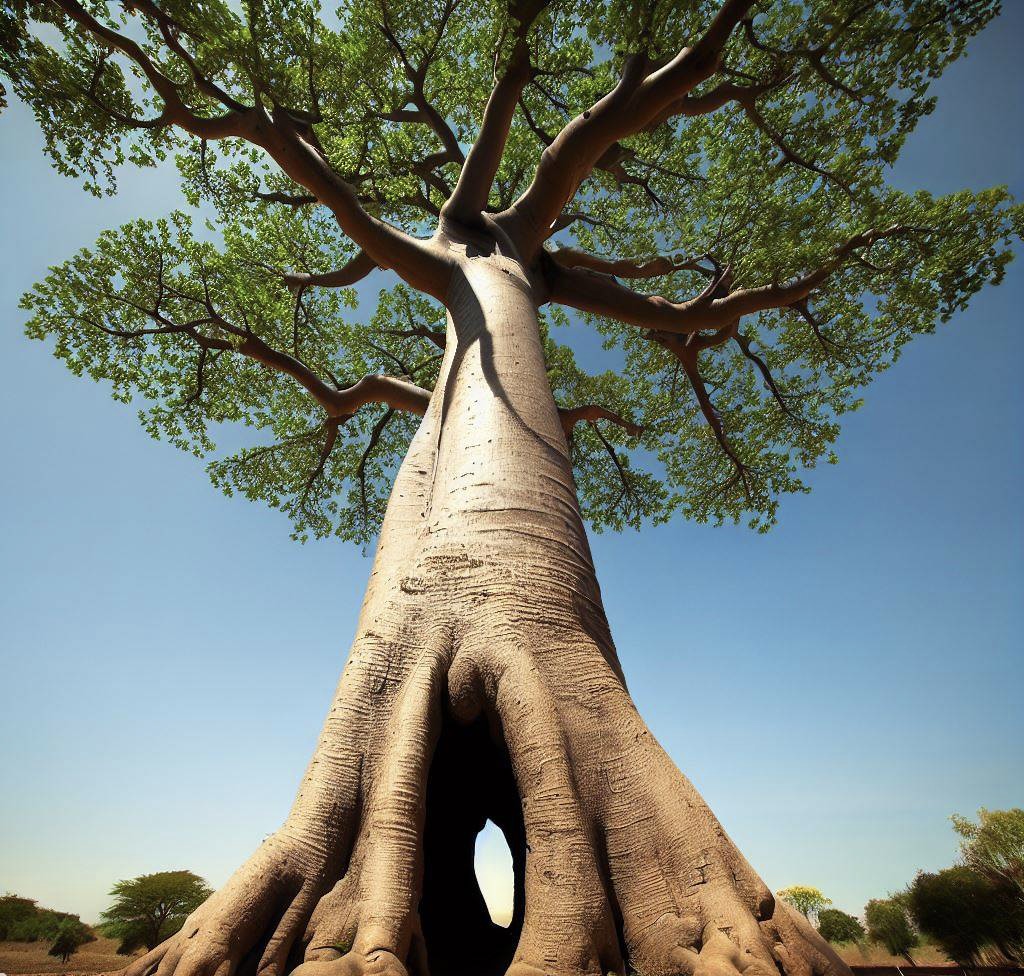
Learn how the baobab tree's water absorption compares to other common tree species, delve into its extensive root system, and highlight the significance of the baobab tree for African families and their water and food needs.
Baobab's Water Absorption Abilities.
When it comes to water absorption, the baobab tree stands out among its peers. Unlike many other trees that rely on surface-level root systems to draw water from the soil, the baobab possesses an extraordinary root structure that extends deep into the ground. These roots, which can reach up to 100 feet (30 meters) in length, allow the baobab tree to tap into underground water sources.
A big, fully grown baobab tree can hold a tremendous amount of water in its trunk, branches, and roots. It's like having several thousand gallons of water stored inside it. To give you an idea of how much water that is, it's similar to filling about ten bathtubs or having enough water to fill up a medium-sized backyard swimming pool.
This large water storage helps the baobab tree survive long periods without rain, and it becomes a crucial source of water for many different plants and animals that depend on it in dry environments. It's like a lifeline for them during tough times when water is scarce. This is why the baobab tree is called the tree of life.
Comparing Baobab Trees to Common Tree Species.
In contrast to the baobab's extensive root system, many common tree species have shallower roots that do not penetrate as deeply into the soil. These trees primarily depend on rainfall and surface water sources for their water supply. As a result, during dry seasons or in arid regions, these trees may struggle to access sufficient water, leading to decreased growth and potential survival challenges.
Baobab's Root System.
The baobab tree's deep-reaching root system plays a crucial role in African communities. For generations, Africans have recognized the baobab's importance as a water source. In times of drought or scarcity, people turn to the baobab tree and its stored water reserves as a lifeline.
African families, living in close proximity to baobab trees, have devised ingenious ways to extract water from this majestic tree. They create small holes in the trunk, allowing them to access the stored water inside. This ancient practice demonstrates the deep bond between Africans and the baobab tree, illustrating the tree's significance in sustaining communities during water crises.
Baobab tree fruits and uses.
Indulge in a refreshing and nutritious baobab smoothie recipe, featuring banana, berries, and baobab fruit powder. Follow simple directions to blend the ingredients into a smooth concoction, perfect for a healthy treat. Explore other culinary uses of baobab fruit pulp, such as smoothie bowls, juices, desserts, and salad dressings.

The baobab tree provides more than just water. Its leaves, fruits, and bark are rich in nutrients and have been traditionally used in African cuisines and medicines. The tree's fruit, known as monkey bread, is highly nutritious and a valuable food source for many Africans.
Baobab tree fruits are highly prized for their nutritional value and versatile uses. The fruits, commonly known as baobab pods or monkey bread, have a hard, woody exterior and contain a powdery pulp.
The baobab fruit pulp has a tangy, citrusy flavor, often described as a blend of grapefruit, pear, and vanilla. In some African cuisines, baobab fruit pulp is used to prepare traditional dishes such as porridges, sorbets, and sherbets. It is valued for its flavor, nutritional content, and ability to thicken and enhance the texture of the dishes.
Baobab fruit powder is also available as a nutritional supplement in the form of capsules or as a standalone powder. It can be consumed to supplement one's diet with the abundant nutrients found in baobab fruits.
Baobab Smoothie ingredients and directions.
Ingredients:
1 ripe banana
1 cup of fresh or frozen berries (such as strawberries or blueberries)
1 tablespoon of baobab fruit powder
1 cup of coconut water or almond milk
Optional: honey or maple syrup for sweetness.
Directions:
In a blender, combine all the ingredients and blend until smooth. Adjust the sweetness by adding honey or maple syrup if desired. Pour into a glass and enjoy a refreshing and nutritious baobab smoothie.
Apart from this recipe, baobab fruit pulp can also be used in smoothie bowls, juices, desserts, jams, and even added to salad dressings for a tangy twist.
As baobab fruits gain popularity worldwide, they are becoming more accessible in the form of powders or as dried fruit pulp. This allows people to enjoy the benefits and unique flavor of baobab in their culinary endeavors while supporting the communities that cultivate and harvest these incredible fruits.


