


The Seven Plagues We Opened Ourselves
The Seven Plagues We Opened Ourselves
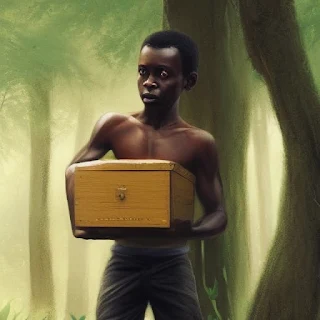
The box was never cursed. We were simply told never to open it again.
Grandmother says the story happened exactly like this.
Long after the last slaver ship had sailed, long after the missionaries had built their stone churches and left, a young man named Kofi — proud, educated in the white man’s school, ashamed of “backward” village ways — walked the forest path and found an iron box half-buried under a silk-cotton tree.
The elders saw it and grew quiet.
“Bury it deeper,” they said. “That box has already been opened once. Seven terrible spirits flew out the first time. Never again.”
But Kofi laughed. “Old people fear everything. These are modern times.”
That night, while the village slept, he pried the box open with a crowbar.
A cold wind blew from the coast. Seven spirits — older than the forest, older than the names of our gods — rose up, stretched their long-crushed wings, and recognised the air of home.
They have never left since.
We did not bring them in ships.
We opened the door and begged them to enter.
The Seven Plagues We Still Feed
First Plague: The Spirit of Division
It whispers that your brother from the next village is your enemy because he prays facing a different direction, or speaks with a tongue you do not share. It draws lines on the same red earth where our grandmothers once danced together.
Second Plague: The Spirit of Extraction
It convinced us that the land is only valuable when emptied. It turned sacred groves into charcoal, rivers into poison, children into numbers on a mining company’s ledger.
Third Plague: The Spirit of Self-Hate
It taught us to bleach our skin, straighten our hair, and laugh at our own grandmothers’ names. It made us believe that everything about us is a problem to be solved by someone from far away.
Fourth Plague: The Spirit of the Border
It drew imaginary lines across our mothers’ wombs and told us the child born on the wrong side of the line does not belong. It built walls of paper and razor wire where once there were only footpaths and greeting songs.
Fifth Plague: The Spirit of Silence
It sits on the tongues of the educated and tells them, “Do not speak of these things; it is impolite. It is tribalism. It is in the past.” So the wounds fester.
Sixth Plague: The Spirit of the Saviour
It arrives wearing aid logos and cameras, convinced that we are a charity case, not a continent. It needs our brokenness to feel whole.
Seventh Plague: The Spirit of Forgetting
The strongest of them all. It whispers, “This is just how the world is now.” It makes us believe the box was always open, that we were born into the storm and there is no memory of sunlight.
Every year the spirits grow fatter.
Every year we feed them with our votes, our silence, our small daily cruelties, our shame, our imported bleach creams, our border walls, our laughter at another tribe’s pain.
The elders still sit under the same silk-cotton tree. Their voices are softer now, but they say the same thing they said to Kofi:
“The box is still open.
Any one of us can choose to close it.
But first we must name the spirits correctly.
And then we must stop feeding them.”
Until that day comes, Grandmother says, do not ask why the land bleeds.
Ask instead why we keep bringing bowls to the feast of the seven plagues we ourselves unleashed.


