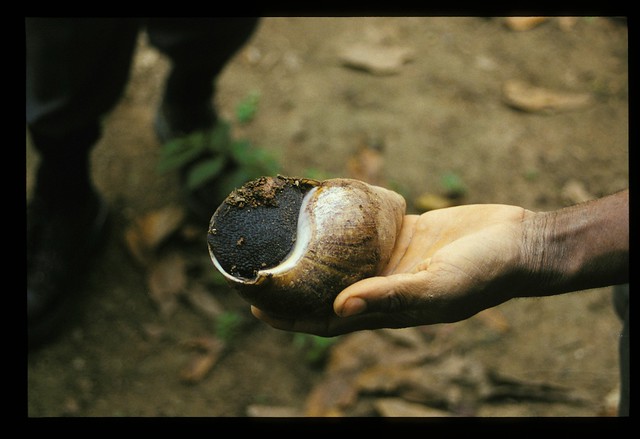
Giant African snails can grow as large as an adult’s fist.
Freakish Giant African Snails Live on All Continents Except Antarctica
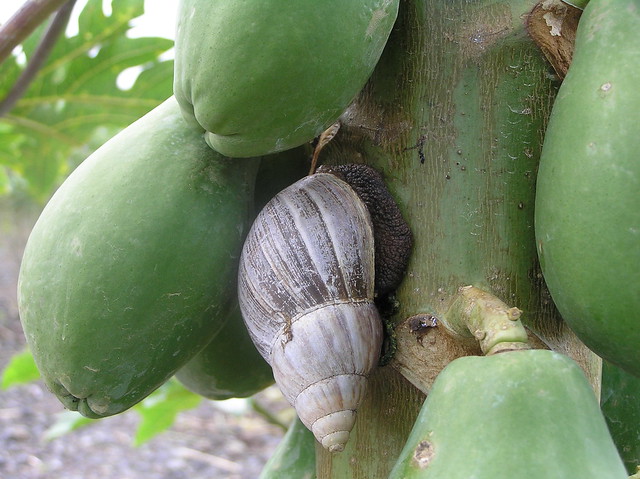
Scientists call the giant African snail (Lissachatina fulica) one of the world’s most damaging invasive species. It eats at least 500 plant types — from breadfruit and cassava to cocoa, papaya, peanuts, beans, and melons.
What the Giant African Land Snail Looks Like
The shell is usually reddish-brown with faint yellow vertical stripes, but color changes with diet and habitat. In Africa it lives on forest edges, riverbanks, shrublands, farms, gardens, wetlands, and even urban areas.
Giant African snail feeding on papaya.
Behavior and Life Cycle
These snails are nocturnal and hide underground during the day. They are solitary — even after laying eggs there is no parental care. Their mouth contains a radula, a tongue-like organ lined with tiny teeth to scrape food.
They are hermaphrodites (possessing both male and female organs) and can self-fertilize, though most mate normally. Eggs hatch in a few hours to 17 days; maturity comes at 5–15 months depending on temperature. Lifespan is usually 5–6 years but can reach 9 years.
Environmental and Human Impact
Giant African snails damage crops, alter soil by adding calcium carbonate, and even create road hazards when crushed bodies make surfaces slippery. They produce foul odors when they die and compete with native species. Predators include ground beetles, caterpillars, other snails, and some vertebrates.
Three Quick Facts:
Native to East Africa; also called the kalutara snail.
“Giant African snail” refers to three species: Achatina fulica, Achatina achatina (giant Ghana tiger snail), and Archachatina marginata (margies).
Now found across Asia, the Americas, Europe, and Pacific islands due to pet trade and agriculture.
Fried Obuunu Plantains – Recipe & Botany of a West African Staple | African Foodways Heritage Archive
Documentation: Fried Obuunu Plantains – Recipe, Botany, and the Culinary Intelligence of a West African Staple
Archive Entry: African Foodways Heritage Archive Primary Subject: Plantain (Musa × paradisiaca) Dish Documentation: Fried Obuunu Plantains (Nigerian Street Food) Core Analysis: Staple Crop Culinary Application Key Concept: The Ripening Continuum & Starch-to-Sugar Transformation Culinary Region: West Africa, Nigeria Originally Documented: July 2017 | AFHA Compiled: January 2026
The Plantain's Duality: The plantain is a food of profound transformation. It is not a singular ingredient but exists on a biochemical continuum from starch to sugar. This natural progression dictates its entire culinary destiny: from a savory, potato-like staple when green, to a sweet, caramelizable treat when ripe. The fried Obuunu plantain captures this ingredient at its pivotal moment—ripe enough for sweetness, firm enough for structure—showcasing how West African cuisine expertly navigates this botanical timeline.
Figure 1. Fried Obuunu Plantains. This preparation exemplifies the optimal use of a ripe plantain: high heat catalyzes caramelization of its natural sugars, creating a crisp exterior while the interior softens to a tender, creamy consistency.
Tripartite Analysis: Understanding the Plantain
1. Botanical & Biochemical Identity
Species Designation: Primarily Musa × paradisiaca (AAB genome group), distinctly different from dessert bananas (Musa acuminata AAA group).
Core Distinction: Higher starch content, lower water content, and thicker peel than dessert bananas. Designed for cooking, not raw consumption.
The Ripening Continuum:
Stage 1 (Green): >80% starch. Behaves like a tuber; used for boiling, frying (chips), or milling into flour.
Stage 2 (Yellow): Starch converts to sugars (sucrose, glucose, fructose). Ideal for frying (Obuunu) or roasting—firm texture with emergent sweetness.
Stage 3 (Black-Spotted/Ripe): High sugar, softer texture. Best for deep frying where caramelization is desired, or in sweet dishes.
Culinary Chemistry: When fried, the Maillard reaction and caramelization of its sugars create complex flavors and the characteristic golden-brown color.
2. Culinary Versatility & Food System Role
Staple Carbohydrate: A primary source of calories for millions in West and Central Africa, akin to rice, yam, or cassava.
Full-Plant Use: The fruit is the main product, but other parts are utilized: the peel as animal feed, the leaves as cooking wraps and plates, the sap and fibers for traditional uses.
Processing Diversity:
Green: Boiled (as side), fried into chips, pounded into fufu.
Ripe: Fried (Obuunu), roasted, boiled in stews, used in sweet puddings.
Food Security: A perennial crop that produces fruit year-round, providing a reliable food source. Can be harvested at different stages based on immediate need.
3. Cultural & Social Context of "Obuunu"
Street Food Economy: Fried plantains are a low-barrier entry business, supporting countless small-scale vendors, especially women.
Social Snack: Ubiquitous at social gatherings, bars, and as a quick, affordable snack. Often paired with grilled meat (suya), peanuts, or a cold drink.
Seasoning Intelligence: The classic seasoning of garlic powder, red pepper, and salt is not arbitrary. It adds savory (umami), heat, and mineral notes that perfectly counterbalance and enhance the fruit's sweetness, creating a more complex snack.
The Name "Obuunu": While specific in origin, the term colloquially evokes the concept of a satisfying, savory fried plantain snack across many Nigerian communities.
Dish Documentation: Fried Obuunu Plantains
Recipe: Fried Obuunu Plantains (Nigerian Street Food Style)
Culinary Context: Everyday street snack, bar food, home side dish. Key Technique: Shallow or deep frying at correct temperature to achieve crispness without oil saturation. Critical Ingredient State: Ripe but firm yellow plantains with black speckles (Stage 2-3 on the continuum). Active Time: 5 minutes Cooking Time: 10 minutes Yield: Serves 4 as a snack
Ingredients & Rationale
Ripe Plantains (2): Must be ripe (yellow/black) for sugar content, but still firm enough to hold shape when sliced and fried.
Ground Red Pepper (1 tsp): Adds heat and color. Cayenne is ideal, but any ground chili works.
Salt (¼ tsp): Enhances all flavors and balances sweetness.
Oil for Frying: A neutral oil with a high smoke point (vegetable, peanut) is traditional. Palm oil adds a distinct flavor and color.
Method as Applied Technique
Prepare the Fruit: Peel and slice diagonally. The diagonal cut creates a larger surface area for more crispy edges and even cooking.
Fry with Precision: Heat oil to ~350°F (175°C). Correct temperature is crucial: too low makes them oily, too high burns the outside before the inside softens.
Manage the Reaction: Fry 1.5-2 mins per side. This is the window where caramelization occurs, creating the golden-brown color and rich flavor.
Drain Properly: Drain on a rack, not just paper towels. This allows steam to escape, preventing sogginess and preserving crispness.
Season Strategically: Season IMMEDIATELY after frying. The hot surface helps the seasoning adhere.
Serving Note: This is finger food. It is meant to be eaten hot, often alongside other small bites or as an accompaniment to a main meal.
The Plantain in the Wider West African Foodway
Beyond Frying: A Culinary Chameleon
The Obuunu recipe is one node in a vast network of plantain uses:
Boiled Green Plantain: Served as a simple, savory side, similar to boiled potatoes.
Plantain Fufu: Boiled green plantains pounded into a smooth, stretchy dough, served with soups and stews.
Plantain Chips (Kpekere): Thinly sliced green plantains deep-fried until crisp, a popular snack across the region.
Roasted Plantain (Boli): Whole ripe plantains grilled over coals, often sold by street vendors and eaten with palm oil or peanut sauce.
Plantain in Stews: Ripe plantain pieces added to rich, spicy stews where they soften and thicken the sauce.
Nutritional and Agroecological Significance
The plantain's value extends beyond the plate:
Nutritional Profile: A good source of complex carbohydrates, dietary fiber, potassium, and vitamins A and C (especially when ripe).
Agroecological Fit: Thrives in tropical lowland climates, often grown in mixed cropping systems (with cocoa, coffee, or other fruit trees), contributing to farm biodiversity and soil health.
Reduced Waste: The entire plant has uses, and the fruit itself can be harvested and consumed at multiple stages, minimizing loss.
Documented Technique: Navigating the Ripening Continuum for Cooking
Selecting the right plantain stage is the first and most critical step in any recipe. This decision tree is fundamental West African culinary knowledge:
Identify Your Goal: Savory/starchy or sweet/tender?
Assess the Fruit:
Green, firm skin: Use for boiling, chips, fufu. Flavor is neutral, starch is resistant.
Yellow skin, firm flesh: The "Obuunu" stage. Ideal for frying or roasting where structure is needed.
Yellow with many black spots, slightly soft: Peak sweetness. Best for deep frying (where it will caramelize intensely), or in sweet porridges.
Black, very soft skin: Very high sugar, lower structure. Best for mashing, baking, or adding to sweet dishes where texture is less critical.
Control Ripening: Ripening can be accelerated by placing plantains in a paper bag with a ripe banana (which emits ethylene gas). To slow ripening, store in a cool, dry place, not the refrigerator (cold damages the peel).
This entry forms part of the African Foodways Heritage Archive's documentation of staple crops and their culinary expressions. The fried Obuunu plantain is archived here not merely as a snack recipe, but as a specific, optimized application of the plantain's biochemical properties. It serves as an entry point to understanding a crop that is both botanically distinct and culinarily central—a testament to the sophisticated, intuitive food science embedded within everyday West African cooking practices.
Documentation: Msir (Preserved Lemon) – Historical Preservation Method & Culinary Intelligence in North African Foodways
Archive Entry: African Foodways Heritage Archive Primary Subject: Msir (Preserved Lemon, Citrus × limon) Technique Documentation: Salt-Fermentation Preservation Historical Source: 19th-20th Century Agricultural Surveys of the Maghreb Key Principle: Osmotic Preservation & Flavor Concentration Culinary Region: North Africa (Morocco, Algeria, Tunisia, Libya, Egypt) Originally Documented: July 2017 | AFHA Compiled: January 2026
The Preservation Paradox: Msir transforms the perishable fresh lemon into a shelf-stable, intensely flavored condiment through the ancient principle of salt preservation. In regions historically without refrigeration, this technique captured the essential oils and aroma of the lemon rind while creating a unique fermented flavor profile distinct from fresh citrus. The result is not merely a preserved ingredient but a culinary transformation that generates a new, essential flavor component of North African cuisine.
Figure 1. Traditional Msir preparation. The method uses salt to draw moisture from lemons via osmosis, creating a natural brine that preserves the fruit through a combination of high salinity and mild lactic acid fermentation. The rind softens and the flavors concentrate over 4-8 weeks.
Tripartite Analysis: Understanding Msir
1. Scientific & Technical Basis
Preservation Mechanism: Osmosis – salt draws water from lemon cells, creating a hypertonic environment that inhibits spoilage microorganisms.
Chemical Transformation: The brine (15-20% salinity) allows for mild lactic acid fermentation while preventing pathogenic bacterial growth.
Flavor Development: Enzymatic activity continues in the brine, breaking down pectin in the rind (softening it) and developing complex flavor compounds not present in fresh lemons.
Optimal Conditions: Room temperature (18-22°C/64-72°F) for initial fermentation, then cool storage. The process requires lemons with thick, oily rinds for best results.
2. Historical Documentation & Context
Agricultural Records: French and Arabic agricultural surveys of Morocco and the Maghreb from the late 19th and early 20th centuries (1880s–1930s) document lemon (Citrus limon) as a common orchard tree.
Preservation Context: These surveys specifically note salting as a standard preservation method in regions without refrigeration. Lemons were "slit, packed in salt, and stored until their rinds softened and their essential oils concentrated."
Documented Terms: Referred to in historical texts as "citron confit" (French) or "citron salé," corresponding directly to what is now known as Msir or preserved lemon.
Purpose Recorded: Historical manuals indicate this was not merely culinary but practical—extending shelf life for transport and ensuring availability beyond the harvest season.
3. Culinary Application & Usage Principles
Primary Use: The preserved rind only is used in cooking. The pulp becomes excessively salty and is typically discarded after the rind is removed.
Flavor Profile: Intensely lemony but without sharp acidity, deeply savory (umami), salty, with fermented complexity.
Usage Ratio: Extremely potent. 1-2 teaspoons of finely chopped preserved lemon rind is sufficient to flavor a dish for 4-6 people.
Salt Adjustment: When using preserved lemon in a recipe, significantly reduce or eliminate added salt until the dish can be tasted.
French colonial agronomy manuals and regional agricultural surveys from the late 19th and early 20th centuries provide primary source validation of this preservation technique:
Key Source Categories Identified:
French Colonial Agronomy Manuals (1880s–1930s)
Titles such as "Agriculture de l'Afrique du Nord" with technical chapters on citrus cultivation
Sections on: "Les agrumes" (Citrus fruits), "Le citronnier" (The lemon tree), "Conservation des fruits" (Fruit preservation)
Specific references to "Salaison et saumure" (Salting and brine) for lemon preservation
Regional Moroccan Agricultural Surveys
Pre-protectorate and protectorate-era fruit cultivation manuals
Documentation of "citron confit" (preserved lemon) as routine practice
Notes on varietal differences and which lemons were best suited for preservation
Technical Documentation Includes:
Climate suitability analysis for lemon cultivation in the Maghreb
Data on rind thickness and essential oil content (critical factors for successful preservation)
Traditional storage methods before mechanical refrigeration
Market practices for preserved lemon transport and sale
Historical Conclusion: The technique archived here as Msir is not a recent innovation but a documented traditional practice with roots in pre-refrigeration food preservation strategies, specifically recorded in North African agricultural literature from the late 19th century onward.
Technique Documentation: Traditional Msir Preparation
Method: Traditional Msir (North African Preserved Lemons)
Culinary Context: Essential pantry condiment in North African cuisine Preservation Principle: Salt-driven osmosis and fermentation Critical Factors: Lemon quality, salt ratio, submersion in brine, time Active Preparation: 15 minutes Fermentation Time: 4-8 weeks minimum Yield: 1 quart preserved lemons
Ingredients & Rationale
Lemons (4 large): Preferably organic with thick, oily rinds. Meyer lemons can be used but have different characteristics.
Sea Salt (½ cup/150g): Non-iodized salt is essential. Iodine can inhibit fermentation and discolor the lemons.
Optional Flavorings: Bay leaves, coriander seeds, black peppercorns, cinnamon stick, or chili peppers may be added to the jar.
Additional Lemon Juice: May be needed to ensure complete submersion if lemons don't release enough liquid.
Step-by-Step Process with Technical Notes
Lemon Preparation: Wash thoroughly. Cut lengthwise into quarters from the tip, stopping 1 inch from the base so the lemon remains intact. This creates maximum surface area for salt penetration while maintaining structure.
Salting: Generously pack salt into the cuts and over the exterior. The salt draws out moisture via osmosis, creating the brine.
Packing: Press lemons tightly into a sterilized jar, adding optional spices between layers. Apply pressure to release juices.
Brine Formation: Lemons must be completely submerged in liquid. If insufficient juice is released after packing and pressing, add freshly squeezed lemon juice to cover completely. Air exposure leads to spoilage.
Fermentation: Seal jar and store at cool room temperature (18-22°C/64-72°F) away from direct light. The brine will become cloudy as fermentation begins—this is normal.
Maturation: Allow 4 weeks minimum, 8 weeks optimal. During this period, occasionally turn the jar to redistribute brine and spices. The rinds will soften from pectin breakdown.
Storage: Once fermented, store in refrigerator where they will keep for 6-12 months. The brine may be reused for subsequent batches.
Usage Guidelines
To Use: Remove a lemon piece from the brine, rinse under cold water to remove excess salt, and scrape out the pulp (which is typically discarded). Use only the softened rind, finely chopped or sliced.
Potency Warning: Due to concentrated flavor and high salt content, begin with small amounts (½ to 1 teaspoon chopped rind per 4 servings) and adjust to taste.
Culinary Applications & Modern Adaptations
Traditional and Contemporary Uses
Classic North African Applications
Tagine Preparations: The most famous use. Added to chicken, lamb, or vegetable tagines during cooking, where it infuses the entire dish.
Salad Dressings: Finely minced preserved lemon rind added to vinaigrettes or yogurt-based dressings.
Grain Dishes: Mixed into couscous, rice, or quinoa during or after cooking.
Marinades: Combined with olive oil, garlic, and herbs for meat, poultry, or fish.
Dips & Spreads: Incorporated into hummus, labneh, or bean dips.
Modern Culinary Adaptations
Pasta & Risotto: Added to cream-based or olive oil-based pasta sauces.
Seafood: Paired with grilled fish or mixed into seafood stews.
Vegetarian Dishes: Enhances roasted vegetables, lentil dishes, or vegetable stews.
Cocktails: Used as a garnish or muddled into cocktails for a savory twist.
Compound Butters: Mixed into softened butter with herbs for finishing grilled meats or vegetables.
Flavor Pairing Principles
Complementary: Olives, garlic, cumin, coriander, ginger, saffron, parsley, cilantro, mint
Protein Pairings: Chicken, lamb, fish (especially oily fish), chickpeas, lentils
Texture Contrast: Works well with creamy elements (yogurt, tahini) and crisp vegetables
Documented Technique: The Science of Salt Preservation
Understanding the underlying principles ensures successful preservation:
Osmotic Action: Salt concentration outside the lemon cells is higher than inside, drawing water out through cell membranes. This creates the brine and dehydrates potential spoilage organisms.
Water Activity Reduction: Salt binds free water molecules, reducing "water activity" (a_w) below levels that support most spoilage bacteria and fungi.
Fermentation Balance: At 15-20% salinity, lactic acid bacteria (which tolerate salt) can still function, creating a mild fermentation that develops flavor complexity while pathogenic bacteria are inhibited.
Enzymatic Activity: The lemon's own enzymes continue to work in the brine, breaking down pectin (softening the rind) and developing flavor compounds.
Essential Oil Preservation: The oil glands in the lemon rind are preserved intact, concentrating the aromatic compounds that give preserved lemon its distinctive flavor.
Safety Note: Properly prepared Msir with adequate salt and complete submersion is inherently safe due to the hostile environment created for pathogens. Visible mold or off-odors indicate spoilage and the batch should be discarded.
Regional Context & Contemporary Significance
Geographic and Agricultural Context
Msir is rooted in specific environmental and agricultural conditions:
Lemon Production: North African countries (Algeria, Egypt, Libya, Morocco, Tunisia) are significant lemon producers, with approximately 75% of production consumed locally.
Climate Adaptation: The preservation technique developed as an adaptation to seasonal availability and the challenge of perishability in warm climates before refrigeration.
Agricultural History: Historical surveys note lemon cultivation as established practice in the Maghreb, with specific varieties selected for their preservation qualities.
Nutritional Context: Lemons provide vitamin C, calcium, magnesium, and potassium. Preservation alters but doesn't eliminate these nutrients, providing access to citrus benefits year-round.
Modern Relevance
This traditional technique maintains contemporary significance:
Culinary Tradition: Maintains a direct link to historical North African food preservation knowledge.
Flavor Innovation: Provides chefs worldwide with a unique flavor component for creative applications.
Sustainable Practice: Extends the shelf life of seasonal produce without energy-intensive refrigeration.
Cultural Preservation: Represents an intact culinary tradition with documented historical roots.
Global Adaptation: The technique has been adopted globally while maintaining its essential North African character.
This entry forms part of the African Foodways Heritage Archive's documentation of traditional preservation techniques. Msir is archived here not merely as a recipe but as a scientifically grounded preservation method with documented historical practice. It represents an intelligent adaptation to environmental constraints—transforming a perishable seasonal fruit into a shelf-stable, intensely flavored condiment that has become indispensable to North African cuisine and continues to inspire global culinary innovation.
Documentation: Offal & Trotters in African Cuisine – Kibda & Chicken Feet as Delicacy | African Foodways Heritage Archive
Documentation: 'Unexpected' Proteins in African Cuisine – Offal & Trotters as Delicacy, Nutrition, and Food Sovereignty
Archive Entry: African Foodways Heritage Archive Primary Subject: Valorization of Offal & Trotters Dish Case Study 1: Kibda Iskandaraniya (Egyptian Sautéed Liver) Dish Case Study 2: Sautéed Chicken Feet with Mustard Greens Broader Category: Gizzards, Hearts, Intestines, Trotters, Kidneys Core Analysis: Culinary Delicacy vs. "Awful" Perception Frameworks: Nutritional Wisdom, Sustainable Economics, Flavor Complexity Originally Documented: July 2017 | AFHA Compiled: January 2026
The Central Contradiction: What is dismissed as "awful" or "waste" in some global food cultures is celebrated as delicacy, nutrition, and culinary intelligence across Africa. This entry confronts that cultural divide head-on. It documents how the use of liver, chicken feet, gizzards, hearts, and intestines is not a matter of mere necessity but a conscious choice embedded in a food philosophy of respect, optimization, and flavor pursuit. These ingredients are pillars of a sustainable system that views the whole animal as valuable and sees nutrient density as a premium.
Figure 1. Kibda Iskandaraniya. Far from a humble cut, liver is elevated to a street food star in Egypt through expert spicing (cumin, cinnamon) and quick cooking, showcasing the technique required to master its unique texture and flavor.
Tripartite Analysis: Why "Unexpected" Proteins are Central
1. Nutritional & Biological Intelligence
Nutrient Density: Organ meats are nature's most concentrated sources of vital nutrients. Liver is unparalleled in heme iron, vitamin A, B12, and copper. Hearts are rich in CoQ10 and B vitamins.
Collagen & Gelatin: Trotters (feet) and skin are rich in collagen, which breaks down into gelatin when cooked slowly, supporting joint health, gut integrity, and creating luxurious, unctuous sauces.
Bioavailability: The nutrients in offal are often in highly bioavailable forms, meaning the body can absorb and use them more efficiently than from plant sources or supplements.
Historical Context: In both pre-colonial and modern settings, these parts provided essential nutrients that could prevent deficiency diseases, making them crucial for public health.
2. Economic & Ecological Pragmatism
Whole-Animal Respect: Using the entire animal is a form of respect and gratitude, minimizing waste. It is an ethical and spiritual approach to consumption found in many African cultural systems.
Affordability & Accessibility: Offal and trotters are often less expensive than muscle meat, providing high-quality protein and nutrients to broader segments of the population, enhancing food security.
Sustainable Food Systems: This practice aligns perfectly with modern principles of sustainability. It maximizes the yield from each animal, reducing the environmental footprint per unit of nutrition produced.
Market Creation: Vibrant markets exist for these parts, supporting butchers, vendors, and street food entrepreneurs, contributing to local economies.
3. Culinary & Flavor Sophistication
Distinct Textures: They offer unique textures prized by connoisseurs: the springy bite of gizzard, the creamy richness of liver, the gelatinous pull of well-cooked feet.
Flavor Complexity: Organ meats carry deeper, more mineral-rich "umami" flavors than muscle meat. They act as flavor amplifiers in stews and sauces.
Technical Mastery: Cooking these parts well requires specific knowledge: proper cleaning, managing strong flavors with acids and spices (as in Kibda), and slow cooking to tenderize connective tissue (as with feet). This knowledge is a mark of culinary expertise.
Status as Delicacy: In countless contexts—from South African walkie talkies (chicken heads and feet) to Egyptian street food—these dishes are sought-after specialties, not foods of last resort.
Dish Documentation: Two Case Studies in Valorization
Case Study 1: Kibda Iskandaraniya (Egyptian Liver)
Culinary Context: Ubiquitous Egyptian street food and home-cooked meal. Transformative Technique: High-heat searing followed by brief braising with aromatics and a distinctive spice blend (cumin, cinnamon, clove, cardamom). Cultural Note: The name links it to Alexandria, a historic port city, suggesting a dish refined through trade and cosmopolitan influence.
Key Analysis
Spice as Transformer: The warm, pungent spice mix is not just for flavor; it balances the mineral-rich, sometimes metallic notes of liver, making it universally palatable.
Speed & Freshness: Unlike slow-cooked offal stews, this dish is quick, aligning with the fast pace of street food and preserving the liver's tender texture.
Nutritional Delivery System: It is a highly efficient vehicle for delivering a massive dose of bioavailable iron and vitamins in a delicious format.
Case Study 2: Sautéed Chicken Feet with Greens
Culinary Context: A home-style delicacy found across many African countries, from Nigeria to South Africa. Transformative Technique: Extended braising or steaming to break down collagen, followed by sautéing with bitter greens. Cultural Note: The act of sucking the meat and gelatin from the bones is a communal, tactile, and enjoyable part of the eating experience.
Key Analysis
The Power of Collagen: The long cooking transforms tough connective tissue into a health-supporting, mouth-coating gelatin that enriches the simple pan sauce.
Bitter Balance: The pairing with mustard greens (or similar bitter greens) is classic. The bitterness cuts through the richness of the feet, creating a balanced and sophisticated flavor profile.
Zero-Waste Exemplar: This dish is a direct, delicious application of the "nose-to-tail" philosophy long before it became a trendy culinary term in the West.
Figure 2. Sautéed Chicken Feet with Greens. This dish exemplifies the elegant simplicity of transforming an underutilized part into a nutrient-dense, flavorful centerpiece, challenging preconceived notions of what constitutes a delicacy.
The Broader Palette: Gizzards, Hearts, Intestines, and More
Liver and feet are entry points to a wider world of valorized parts:
Gizzards (Ventriculus): Prized for their dense, chewy texture. Often grilled as street food (e.g., istumbo in East Africa), stewed, or fried. Require long, moist cooking or precise pounding to tenderize.
Hearts: Treated more like a lean, dense muscle meat. Grilled on skewers, added to stews, or sautéed. A rich source of energy-producing nutrients.
Intestines (Tripe): Require meticulous cleaning but reward with a unique texture. Used in soups, stews (e.g., Moroccan kawarma), or grilled. The honeycomb tripe is particularly valued.
Kidneys: Often incorporated into rich, spiced stews or breakfast dishes, valued for their strong flavor and nutrient profile.
Trotters (Pig/Sheep/Goat): Like chicken feet, used to enrich broths and stews with collagen, creating a naturally thick, hearty consistency.
Contemporary Relevance: Reclaiming the Narrative
From "Awful" to "Asset" in Global Discourse
African foodways have been ahead of contemporary food movements:
Anticipating "Nose-to-Tail": African cuisines have practiced this for millennia. The current Western culinary movement toward whole-animal butchery finds a mature, integrated model in African food traditions.
Model for Food Security: In a world needing to produce more food with less environmental impact, the efficient use of the entire animal is a critical strategy. African practices provide a proven blueprint.
Combating Nutritional Neocolonialism: The dismissal of offal as "inferior" is often a form of culinary prejudice. Documenting its deliberate, skilled use in African kitchens reclaims it as a choice of sophistication and wisdom, countering demeaning stereotypes.
Future-Proof Proteins: As the global population grows and alternative proteins are sought, the existing knowledge systems around utilizing all animal parts become increasingly valuable.
Documented Technique: The Universal Principles of Cooking Offal Well
Across diverse African cuisines, common techniques ensure these ingredients shine:
Meticulous Preparation: Cleaning is non-negotiable. This may involve soaking in acidulated water (liver), scrubbing membranes (feet, intestines), or repeated rinsing.
Flavor Balancing: Strong flavors are balanced with assertive companions: acidity (lemon, tomato, vinegar), aromatics (onion, garlic), bitterness (greens), and warming spices.
Appropriate Cooking Method:
Fast & Hot: For tender liver and kidneys—sear quickly to prevent toughness.
Low & Slow: For tough, collagen-rich parts (feet, gizzards, tripe)—braise, stew, or steam for hours to tenderize.
Contextual Serving: They are often served as part of a shared meal with a starchy staple (rice, fufu, bread) that soaks up the flavorful sauces and completes the nutritional profile.
This entry forms part of the African Foodways Heritage Archive's documentation of sustainable and intelligent food procurement. Dishes like Kibda Iskandaraniya and chicken feet with greens are not oddities; they are masterclasses in a comprehensive food philosophy. They teach us about nutrient density, economic wisdom, ecological respect, and the pursuit of deep flavor. By archiving these recipes and their context, the AFHA preserves a vital counter-narrative: that what some cultures cast aside, African culinary wisdom has long recognized, refined, and celebrated as some of the very best the animal has to offer.
Documentation: Chicken Feet – Anatomical Butchery, Sourcing, and Culinary Application of a Prized Delicacy
Archive Entry: African Foodways Heritage Archive Primary Subject: Chicken Feet (Trotters) – Gallus gallus domesticus Entry Type: Technical Ingredient Masterclass Core Sections: 1. Anatomy 2. Butchery Protocol 3. Sourcing Guide 4. Applied Recipe Culinary Tradition: Pan-African Delicacy / Global Nose-to-Tail Practice Key Technique: Collagen Rendering via Braising Originally Documented: July 2017 | AFHA Compiled: January 2026
Archival Premise: To truly understand an ingredient, one must understand its structure. This entry treats the chicken foot with the same respect afforded to prime beef cuts. Just as a steak guide details the ribeye, sirloin, and filet, this guide details the toenail, footpad, tendon, and joint. Mastery of this "unexpected" part is not just culinary skill—it is an act of participating in a sustainable, waste-nothing food ethos and gaining entry into the rich culinary practices of African and Asian markets worldwide.
Part 1: Anatomical Breakdown – The "Cuts" of a Chicken Foot
Understanding the composition demystifies the preparation and explains the unique culinary payoff. Think of this as your map to the ingredient.
1. Toenail (Claw)
Description: The hard, keratinous sheath at the end of each toe. Culinary Status:Inedible. Must be removed. Protocol: Use sturdy kitchen shears to clip off the tip of each nail, just beyond the quick (the pinkish vein). Discard.
2. Scaly Skin (Epidermis)
Description: The outer layer of tough, keratinized scales. Culinary Status:Inedible. Must be removed. Protocol: After scalding, this layer and the underlying yellow membrane peel off like a glove, revealing the clean, pinkish skin beneath.
3. Footpad
Description: The thickened, cushioned underside of the foot. Culinary Status:Edible. Prized for texture. Note: Becomes exceptionally tender and gelatinous when slow-cooked. It is a concentrated source of collagen.
4. Tendons & Ligaments
Description: The dense, fibrous connective tissues running along the toes and through the foot. Culinary Status:Edible. The primary target of cooking. Note: Composed almost entirely of collagen. Extended moist cooking (braising, stewing) hydrolyzes collagen into gelatin, creating a rich, unctuous mouthfeel and health-supporting compounds.
5. Phalangeal Joints
Description: The knuckles where the toe bones meet. Culinary Status:Edible structure. Note: The small bones are inedible, but the cartilage and skin around them become tender. This is where feet are typically "cut in two" for cooking.
6. Tarsometatarsus ("Knee" or Hock)
Description: The long, slender bone of the lower leg, often still attached when feet are sold. Culinary Status:Optional. Protocol: Often removed by the butcher. If present, it can be included for added flavor and collagen, but it is meatier and less tendon-dense than the foot proper.
Part 2: The Butcher's Protocol – Step-by-Step Preparation
This is the essential, non-negotiable process to transform raw chicken feet into a ready-to-cook ingredient. Mise en place is critical: have a bowl of ice water, a trash bowl, and a clean work surface.
Comprehensive Cleaning & Preparation Guide
Inspect & Rinse: Examine feet for any remaining feather shafts or discoloration. Rinse thoroughly under cold running water.
Clip the Toenails: Using heavy-duty kitchen shears, clip off the very tip of each claw. Aim just beyond the visible quick to avoid bleeding. Discard clippings.
Scald to Loosen Skin: Bring a large pot of water to a rolling boil. Submerge the feet for 60-90 seconds. This is not to cook them, but to loosen the outer epidermal layer.
Shock & Peel: Immediately transfer feet to a bowl of ice water to stop the cooking. Once cool enough to handle, begin peeling. The outer scaly skin and the thin, yellow membrane beneath should slip off together, starting at the hock or where the skin is broken. Use a paring knife to help stubborn patches. This step is crucial for aesthetics and texture.
Scrub & Final Rinse: After peeling, scrub each foot lightly under cold water with a brush (a clean nail brush works) to remove any remaining bits of membrane. Rinse until water runs clear.
Segment (Optional but Recommended): Using your shears, cut each foot into 2-3 pieces. Typically, cut through the main pad to separate the toes, or cut between the major joints. This increases surface area for browning, allows flavors to penetrate better, and makes for easier eating.
Ready to Cook: Pat the prepared feet dry with paper towels. They are now ready for braising, stewing, frying, or adding to soup.
Pro-Tip: For maximum convenience, look for "pre-cleaned" chicken feet at Asian or international markets. These have typically had the nails clipped and outer skin removed, saving significant labor. Always give them a quick rinse and inspection before use.
Part 3: Sourcing Guide – The International Grocery Store as Classroom
Where and How to Find Chicken Feet
If your standard supermarket doesn't carry them, consider it an opportunity for a culinary field trip.
Primary Sources:
Asian Markets (Chinese, Vietnamese, Korean, Filipino): The most reliable source. Look in the fresh meat or frozen meat sections. They are often sold in clear bags, pre-cleaned. Terms to listen for: "Chicken paws" (common in North America), "zhuǎo" (爪 - Mandarin).
Latin American Markets (Carnicerías, Mexican Grocers): Frequently sold as "patas de pollo." May be fresh or frozen.
African & Caribbean Markets: A staple ingredient. You will almost certainly find them here, often fresh.
Halal Butchers: An excellent source for fresh, high-quality feet.
Local Butchers or Farmers: If you buy whole chickens from a farm or butcher, you can request the feet be saved and included with your order.
Cultural Navigation & Etiquette:
What to Ask For: "Do you have chicken feet?" is universally understood. You can also ask for "chicken trotters" or "paws."
What to Look For: Feet should appear plump, with a pinkish-beige color (after cleaning). Avoid any with dark spots, excessive bruising, or a strong off-odor.
The Educational Experience: Use this trip to observe. Notice what other "unexpected" parts are available—gizzards, hearts, necks, tails. This visible array is a direct lesson in the global "nose-to-tail" philosophy that your standard supermarket hides.
Buying Tips: They are inexpensive. Buy a pound or two to start. They freeze exceptionally well after cleaning; portion and freeze for future use.
Part 4: Culinary Application – Sautéed Chicken Feet with Mustard Greens
This foundational recipe applies the prepared ingredient. The method highlights the necessary two-stage cooking: braising for tenderness followed by sautéing for flavor integration.
Dish Documentation: Sautéed Chicken Feet with Mustard Greens
Culinary Logic: The braise tenderizes the collagen; the bitter greens cut the richness; the result is a deeply savory, textured dish. Active Prep: 20 min (assuming pre-cleaned feet) Braising: 30 min Sautéing: 10 min Yield: Serves 3-4 as a main with rice
Ingredients
8-10 pre-cleaned chicken feet, cut at the joint
6 large handfuls chopped mustard greens (or kale/collards)
1 large onion, chopped
2 medium tomatoes, chopped
1-2 tsp sea salt
1/2 cup water or stock
1 tbsp palm oil, olive oil, or other fat
Method
Braise: In a heavy pan, combine feet, onion, water/stock, and half the oil. Cover, simmer on low for 25-30 min.
Add Tomatoes: Uncover, add tomatoes and remaining oil. Cook 5 min until tomatoes soften.
Add Greens: Stir in greens and salt. They will wilt quickly.
Sauté to Finish: Cook uncovered 8-10 min, stirring, until greens are tender and sauce is reduced and glossy from rendered collagen.
Serve: Taste for salt. Serve hot over rice. Eat by picking up the feet and sucking the tender skin, gelatin, and meat from the bones.
Eating Technique Note: This is a hands-on, communal food. The enjoyment comes from the tactile experience of working the flavorful morsels from the bones—a practice deeply rooted in many food cultures that value engagement with one's meal.
Figure 1. The completed dish: a testament to the transformation. Through proper preparation and cooking, the humble chicken foot becomes the star of a nutritious, flavorful, and culturally rich meal.
Archival Significance: Why This Level of Detail Matters
This entry does more than share a recipe. It performs a critical archival function:
Demystifies Technique: It breaks the barrier of the "unknown" by providing the "why" and "how" behind each step, from nail clipping to market navigation.
Preserves Embedded Knowledge: The specific steps of scalding and peeling are traditional techniques often passed orally. Documenting them formally preserves this knowledge for future generations and curious cooks.
Validates Cultural Practice: By treating the ingredient with technical rigor, it affirms its legitimacy and value, countering any perception of it being a "lesser" food.
Creates a Replicable Standard: Anyone, anywhere, can now approach chicken feet with confidence, using this guide as a master reference.
This entry forms part of the African Foodways Heritage Archive's Technical Ingredient Series. It stands as a model for how to document a culturally significant food item in its entirety: from its biological structure and requisite butchery, through the logistics of procurement, to its final, delicious expression on the plate. The chicken foot, in this light, is not a mere scrap but a complex ingredient offering lessons in sustainability, texture, flavor, and cross-cultural culinary exploration.
We are a structured digital repository and scholarly publication dedicated to documenting, analyzing, and preserving African culinary heritage. We treat foodways—encompassing ingredients, techniques, rituals, ecology, labor, and trade—as primary sources for cultural understanding. Our 19-year collection (2006–present) is a living timeline, connecting historical research with contemporary developments to show cultural evolution in real time.
Why "Gourmet" in the name?
The term reflects our origin as a culinary anthropology project and our enduring principle: discernment. "Gourmet" here signifies a curated, sensory-driven approach to preservation. It means we choose depth over breadth, treating each entry—whether a West African stew or the political biography of a cashew nut—with the scholarly and contextual seriousness it deserves.
What is your methodological framework?
Our work is guided by a public Methodological Framework that ensures transparency and rigor. It addresses how we verify sources, adjudicate conflicting narratives, and document everything from botanical identification to oral history. This framework is our commitment to moving beyond the "list of facts" to create a reliable, layered cultural record.
How is content selected and organized?
Curration follows archival principles of significance, context, and enduring value. Each entry is tagged within our internal taxonomy (Foodway, Ingredient, Technique, Ritual, Ecology, Labor, Seasonality, etc.) and must meet our sourcing standards. We prioritize specificity—tagging by ethnolinguistic group, region, and nation—to actively prevent a pan-African flattening of narratives.
What geographic and cultural scope do you cover?
Our mission is comprehensive preservation across all 54 African nations. A core principle is elevating underrepresented cultural narratives. You will find deep studies of major cuisines alongside documentation of localized, hyper-specific practices that are often excluded from broader surveys.
How do you handle sources when archives are silent?
When written records are absent, we cite living practice as a valid source. We employ rigorous ethnographic standards: interviews are documented (with permission), practices are observed in context, and knowledge is attributed to specific practitioners and communities. This allows us to archive the intangible—sensory knowledge, oral techniques, ritual contexts—with the same care as a printed text.
Can researchers and the public access the archive?
Absolutely. We are committed to accessibility. The full 19-year collection is searchable and organized for diverse uses: academic research, curriculum development, journalistic sourcing, and personal education. We encourage citation. For in-depth research assistance, please contact us.
How does this work ensure genuine cultural preservation?
By consistently applying our framework since 2006, we have built more than a collection; we have created an irreplaceable record of context. We preserve not just a recipe, but its surrounding ecosystem of labor, seasonality, and meaning. This long-term, methodical commitment ensures future generations will understand not only *what* was eaten, but *how* and *why*, within the full complexity of its cultural moment.