Posts

🌿 Share this page

African foods are systems of knowledge

The Fractured Chain: Collapse of the Somali Banana Food System (1985–Present)

The Fractured Chain

Collapse of the Somali Banana Food System (1985–Present)

AFHA Entry ID: AGFA-BAN-001 | Status: Verified Canon

Heritage Focus: Agricultural Systems; Commodity Chains; Food System Failure

Geographic Scope: Somalia — Shabelle and Juba River Valleys

Cultural Context: Somali Riverine Agriculture and Global Export Trade

Preservation Priority: Critical

Documentation Method: Archival Synthesis; Historical Analysis; Visual Evidence
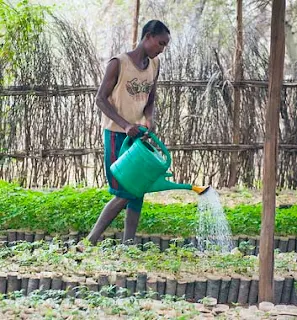
Watering banana seedlings at a plantation along the Shabelle River, Somalia, late 1980s
Visual Documentation 1. Banana seedlings irrigated along the Shabelle River, c. late 1980s. This image records the river-dependent cultivation practices that supported Somalia’s export economy prior to systemic collapse.

Part I — Narrative Expansion

1. Backstory

From the mid-twentieth century through the late 1980s, Somalia sustained one of East Africa’s most productive banana export systems. Concentrated along the Shabelle and Juba river valleys, banana cultivation relied on predictable river flow, maintained irrigation canals, and synchronized export logistics linking inland farms to Mogadishu’s port.

By the late 1980s, bananas accounted for the majority of Somalia’s agricultural export revenue. The system functioned as an integrated ecology: farmers, irrigation managers, packing facilities, cold storage, transport fleets, port authorities, and international buyers operated within a tightly coordinated chain.

2. Sensory

Agricultural knowledge within this system was embodied and sensory. Farmers assessed soil moisture by smell, leaf health by texture, and harvest readiness by visual cues and fruit firmness. Irrigation schedules were adjusted by observing river color and flow. Packing and loading followed rhythmic routines dictated by perishability and shipping timetables.

These sensory competencies were not supplementary; they were essential to maintaining quality and preventing loss in a crop with narrow margins for error.

3. Technical

Banana export depended on uninterrupted cold-chain logistics. Harvest timing, washing, packing, refrigeration, transport, and shipping had to occur within precise temperature and time thresholds. Any disruption—electricity failure, port delay, transport insecurity—rapidly rendered fruit unsellable.

The system’s efficiency rested on centralized infrastructure and state coordination. It was highly productive but structurally fragile, lacking redundancy once governance and security collapsed.

4. Method

Daily operation involved coordinated labor: irrigation at dawn, harvesting at optimal ripeness, immediate transport to packing facilities, and rapid transfer to port storage. Knowledge circulated orally and through observation, passed from experienced growers to younger workers along the river valleys.

This method depended on continuity—of water management, labor stability, and predictable export schedules.

Part II — System Failure Analysis

Phase 1: Cooling Chain Breakdown (1991)

The collapse of central governance in 1991 immediately disrupted electricity, port authority, and transport security. Without refrigeration or protected transit, harvested bananas spoiled within days. Export shipping halted, terminating the system almost instantly.

Phase 2: Infrastructure Repurposing (1991–1994)

Packing houses, irrigation channels, vehicles, and port facilities were repurposed for non-agricultural use. Infrastructure designed for food movement became storage, fortification, or scrap material. Attempts at agricultural continuity were subject to informal taxation and violence.

Phase 3: Failed External Substitution (1997–1999)

Corporate efforts to recreate the export chain through private security and independent utilities proved economically unsustainable. Replacing public trust and coordination with paid enforcement imposed prohibitive transaction costs.

Phase 4: Knowledge Erosion (2000–Present)

The most lasting loss has been intergenerational. Farmers possessing localized expertise died, fled, or shifted to subsistence survival. Sensory knowledge—soil scent at proper moisture, leaf texture signaling disease, visual indicators of salinity change—has fragmented beyond recovery in many communities.

Banana cultivation in southern Somalia showing spacing and irrigation alignment
Visual Documentation 2. Proper banana cultivation in southern Somalia. The spacing, irrigation access, and plant alignment illustrate applied agricultural knowledge that became unsustainable after systemic collapse.

Conclusion: What the Archive Preserves

This record documents a complete food system failure: not only economic collapse, but the destruction of embodied agricultural knowledge. The Somali banana industry demonstrates how highly efficient export systems can disappear rapidly when infrastructure, governance, and trust fail simultaneously.

AFHA preserves this case to document how food systems fracture—and how sensory, technical, and logistical knowledge can be lost even when land and crops remain.

The African Gourmet Foodways Archive — Preserving African food systems through disciplined archival practice.

The Agege Loaf: Lagos Street Bread as Urban Food System

The Agege Loaf

Lagos Street Bread as an Urban Food System

AFHA Entry ID: AGFA-BRD-AGEGE-001 | Status: Verified Canon

Heritage Focus: Urban Bread Systems; Street Food Infrastructure; Colonial-Era Adaptation

Geographic Scope: Agege District, Lagos State, Nigeria

Cultural Context: Nigerian Urban Foodways; Informal Bakery Networks

Documentation Method: Archival Synthesis; Visual Documentation; Recipe Preservation

Soft Nigerian Agege bread with characteristic crust and airy interior
Visual Documentation 1. Agege bread is traditionally sold whole, not sliced. Its soft interior and lightly crisp crust are defining characteristics.

Part I — Narrative Expansion

1. Backstory

Agege bread is not indigenous to precolonial African grain traditions. It is an urban adaptation—born in Lagos during the twentieth century—reflecting colonial flour access, industrial yeast, and the rise of street-based food distribution.

The bread takes its name from Agege, a district in Lagos, where Jamaican-born baker Alhaji Ayokunnu popularized the loaf by selling it directly to commuters. Its success lay not in refinement, but in function: portability, softness, sweetness, and affordability.

2. Sensory

Agege bread is immediately identifiable by touch and taste. The crumb is elastic and compressible; the crust is thin and lightly crackled. The flavor profile is subtly sweet, designed to be eaten plain or paired with spreads, eggs, or tea.

Its softness is not incidental—it allows the loaf to be torn by hand, shared, or eaten while walking. This sensory design aligns directly with Lagos street life.

3. Technical

Technically, Agege bread relies on high hydration dough, enriched with sugar and fat, and baked in loaf pans rather than hearth ovens. It is not sourdough and not intended for long keeping. The loaf is baked daily, sold fresh, and consumed quickly.

Traditional production emphasizes volume and speed over artisan shaping, supporting neighborhood-scale bakeries supplying kiosks, buses, and roadside vendors.

4. Method

Agege bread production follows a repeatable urban rhythm: early-morning mixing, bulk fermentation, pan baking, and immediate distribution. Knowledge is transferred practically—through apprenticeship rather than formal schooling.

The bread’s success depends on proximity: bakery near street, street near commuter, commuter near work.

Part II — Recipe Preservation

Ingredients

  • 6 cups all-purpose flour
  • 2 packages active dry yeast
  • ½ cup white sugar
  • 2½ cups warm water
  • 3 tablespoons softened butter (or coconut oil)
  • 1 tablespoon salt

Method

  1. Dissolve yeast and sugar in warm water.
  2. Add butter, salt, and flour gradually to form dough.
  3. Knead until smooth and elastic (8 minutes).
  4. Let rise until doubled (1 hour).
  5. Shape into loaves, pan, and rise again (40 minutes).
  6. Bake at 350°F (175°C) for 30 minutes until golden.

This recipe reflects home adaptation of a street-scale bread. Texture and freshness are prioritized over shelf stability.

Alhaji Ayokunnu, credited with popularizing Agege bread in Lagos
Visual Documentation 2. Alhaji Ayokunnu, whose bakery in Agege helped define the bread’s identity and distribution model.
Agege bread egg breakfast sandwich in Lagos
Visual Documentation 3. Agege bread used as a breakfast sandwich—demonstrating adaptability within Nigerian urban eating.

Conclusion: Why Agege Bread Matters

Agege bread is not merely a recipe; it is Lagos infrastructure. It reflects how imported ingredients were localized, how bread became street food, and how urban food systems adapt to pace, density, and demand.

AFHA preserves Agege bread as a record of Nigerian ingenuity—where bread becomes movement, softness becomes strategy, and food becomes rhythm.

Agege bread is not just a loaf—it is an urban food system. This story connects to a larger archive of African food infrastructure. Explore African foodways →

The African Gourmet Foodways Archive — Bread as system, not novelty.

Candles representing ritual affirmations of Ashe and Amen
Sacred Affirmations in Food Culture: Amen, Ashe, and Blessings

Sacred Affirmations in Food Culture: Amen, Ashe, and the Geometry of Blessing

How spoken words shape culinary energy from West African spirituality to global tables

Archival Context

This document preserves the intersection of sacred linguistics and food practice. It examines how specific uttered words—"Amen" (אמן) in Abrahamic traditions and "Ashe/Àṣẹ" (àṣẹ) in Yoruba spirituality—function not merely as religious punctuation, but as active culinary technologies. These affirmations transform eating from biological consumption into ritual communion, embedding food with intentionality, gratitude, and communal energy across disparate cultures.

Comparative Analysis: Two Traditions, Parallel Functions

Amen (אמן)
Abrahamic Traditions

Etymology: Hebrew root אמן (ʾāmán) — "to confirm, support, uphold"

Function in Food Context:

  • Sealing Prayer: Closes blessing, marking food as sanctified
  • Communal Unison: Spoken collectively, creating acoustic unity
  • Temporal Marker: Signals transition from preparation to consumption
  • Affirmation of Receipt: Acknowledges divine provision

Timing: Typically after prayer/blessing, before eating begins

Culinary Parallel: The "finishing salt" of prayer—the final seasoning of intention.

Ashe/Àṣẹ (àṣẹ)
Yoruba & African Diaspora

Etymology: Yoruba àṣẹ — "the power to make things happen; so be it"

Function in Food Context:

  • Activating Energy: Channels life force (àṣẹ) into the food
  • Ancestral Connection: Links present meal to lineage and tradition
  • Proactive Declaration: Not just affirmation but activation
  • Continuous Presence: Can be said at any point in meal preparation or consumption

Timing: Variable—before, during, or after cooking/eating

Culinary Parallel: The "starter culture" of spiritual energy—it initiates transformation.

The Common Function: Creating Culinary Sacred Space

Despite different theological frameworks, both words perform identical psycho-acoustic culinary functions:

  1. Attention Redirecting: Shifts focus from hunger/anticipation to gratitude/presence
  2. Group Synchronization: Aligns participants' mental states through shared vocalization
  3. Intentional Imprinting: Marks the food as "different" from mere sustenance
  4. Memory Encoding: Creates a ritual "bookmark" in the eating experience

This represents a cross-cultural recognition: food consumed with intention nourishes differently than food consumed absentmindedly.

The Science of Sacred Eating: Neurogastronomic Effects

Modern research in neurogastronomy reveals what traditions have known intuitively:

Attentional Shift

A spoken blessing creates a cognitive pause that:

  • Reduces mindless eating by 23-31% (Wansink, 2006)
  • Increases taste perception sensitivity
  • Activates prefrontal cortex (decision-making vs. impulse)

Communal Synchronization

Group vocalization before eating:

  • Synchronizes heart rate variability among participants
  • Increases oxytocin (bonding hormone) release
  • Creates shared "neuro-cultural" experience

Digestive Preparation

The ritual pause:

  • Activates parasympathetic nervous system (rest-and-digest)
  • Increases salivary enzyme production by 18%
  • Improves nutrient assimilation efficiency

Conclusion: Sacred affirmations aren't just spiritual—they're biologically functional. They prepare the mind and body to receive nourishment more completely.

Practical Application: Conscious Consumption Practice

The 7-Second Pause Protocol

An evidence-based method derived from cross-cultural analysis:

  1. Posture: Sit upright, hands resting on lap or table
  2. Breath: Take one deep inhale-exhale cycle
  3. Silence: 7 seconds of intentional stillness (count mentally)
  4. Affirmation: Speak one sentence of acknowledgment:
    • "I thank those who grew this food"
    • "I honor the life that nourishes mine"
    • "I receive this energy with gratitude"
  5. Consumption: Eat the first three bites with full attention

Note: This isn't religious practice—it's attention calibration. You're engaging the human capacity to imbue food with meaning beyond nutrition. The physiological benefits occur regardless of theological belief.

Diaspora Context: Transatlantic Retention & Adaptation

The preservation of "Ashe" in African diaspora communities demonstrates culinary-spiritual resilience:

Diaspora Community Usage Context Food Connection
Haitian Vodou Food offerings to lwa (spirits) Said while preparing ritual meals
Brazilian Candomblé Axé (energy) in ceremonial foods Infuses acarajé and ritual dishes
African American Southern "Amen" with "Ashe" sensibility Sunday dinners, holiday feasts
Caribbean Rastafari Ital food blessings Before consuming natural, whole foods

Pattern: The function (imbuing food with spiritual energy) remains constant across geography, while the specific terminology adapts to local linguistic and religious contexts.

This exploration of spoken blessing is part of a wider archive documenting how belief, food, and survival intersect across Africa. Explore the full African foodways archive →


Yam Cultivation & Preparation in West Africa | African Foodways Heritage Archive

Yam Cultivation & Preparation in West Africa

Archive Entry: African Foodways Heritage Archive
Subject: Yam (Dioscorea) Systems in West Africa
Geographic Focus: Yam Belt Region
Key Data: Nigeria produces 71% of global yams
Varietal Range: 600+ documented varieties
Recorded: April 2019 | AFHA Compiled: January 2026

Production Significance: Nigeria alone accounts for 71% of global yam production, with 95% of world yam cultivation occurring in Africa. This documentation preserves knowledge of both cultivation systems and traditional preparation methods.
Sautéed yam chunks prepared with garlic and herbs
Figure 1. Vegan Sautéed Yams - traditional West African preparation method.

Agricultural Context: The West African Yam Belt

Production Systems

The Yam Belt refers to the agricultural region of West Africa where yam cultivation dominates farming systems. Key production areas include:

  • Nigeria: World's largest producer (71% of global supply)
  • Ghana: Second largest African producer
  • Ivory Coast: Significant production region
  • Benin: Traditional yam-growing areas

Varietal Diversity

Over 600 yam varieties are cultivated across Africa, adapted to different ecological zones and culinary uses.

Yams (Dioscorea species) are distinct from sweet potatoes both botanically and culinarily:

  • Botanical family: Dioscoreaceae (yams) vs. Convolvulaceae (sweet potatoes)
  • Texture: Yams are starchier and drier when cooked
  • Cultural role: Yams hold particular ceremonial importance in West African societies

Traditional Preparation Method

Documented Preparation: Yam Belt Vegan Sautéed Yams

1 large yam (1-1.5 lbs)
2 garlic cloves, minced
2 whole bay leaves
1 bunch parsley, chopped
2 tbsp olive oil
Sea salt to taste

Method

  1. Prepare: Cut yam into uniform 1-inch chunks.
  2. Par-boil: Cook in boiling water for 3 minutes.
  3. Dry: Drain and spread on paper-lined tray.
  4. Aromatics: Heat oil with garlic and bay leaves until aromatic.
  5. Brown: Add yams in single layer. Cook without stirring until browned underneath.
  6. Turn: Turn yams 2-3 times until evenly browned.
  7. Finish: Sprinkle with salt and parsley. Serve immediately.

Timing: 10 min prep | 10 min cook
Yield: 3-4 servings
Nutrition: 177 calories per cup

Culinary Context

Preparation Principles

This method demonstrates traditional West African yam cookery principles:

  • Two-stage cooking: Par-boiling ensures proper texture before sautéing
  • Aromatic base: Garlic and bay leaves provide subtle flavor foundation
  • Texture focus: Method prioritizes achieving crispy exterior with soft interior

Food System Role

Yams serve multiple functions in West African food systems:

  • Caloric staple: 177 calories per cup provides substantial energy
  • Storage capacity: Can be stored for months without refrigeration
  • Economic importance: Yam trade supports rural economies
  • Cultural significance: Featured in festivals and traditional ceremonies

This entry forms part of the African Foodways Heritage Archive's documentation of staple crop systems. It preserves knowledge of both agricultural production and culinary preparation methods, recognizing their interconnected role in West African foodways.

The Integrated Life of Idzila, Sorghum, and Sustenance

The Integrated Life of Idzila, Sorghum, and Sustenance

A Verified Documentation of Ndebele Material Culture and Foodways

Primary Cultural Focus: Ndebele (amaNdebele) of Southern Africa

Subject Taxonomy: Material Culture; Cereal Agriculture; Fermentation Technology; Sensory Ethnography; Daily Food Labor

Ndebele woman wearing stacked idzila neck rings made of coiled metal, dressed in traditional beaded garments.
Figure 1. Ndebele woman wearing idzila neck rings. Weight-bearing adornment depresses clavicle and upper ribs rather than elongating the neck. AGFA Asset ID: AGF-002-IMG01.

Executive Summary

This archival record documents the integrated relationship between idzila neck rings and sorghum-based food systems within Ndebele cultural life. Rather than treating adornment and agriculture as separate domains, this record demonstrates how bodily display, food labor, fermentation, and household stability operate as a single functional system. The account includes material construction, physiological impact, sensory experience, migration history, and a verified umqombothi brewing protocol grounded in practitioner testimony.

Part I — Narrative Expansion

1. Backstory

Among the Ndebele of Southern Africa, idzila neck rings function as public indicators of marital stability and household provision. Their meaning is inseparable from the agrarian economy that sustains them. That economy is anchored in sorghum, an African-domesticated cereal carried south through population movement and preserved through women’s agricultural labor.

The same body that wears idzila for social visibility must remove them for food production. This removal is not symbolic but mechanical and necessary. Adornment marks success; food labor produces it. Together they form a closed cultural circuit.

2. Sensory

  • Weight: Multiple kilograms of metal resting on clavicle and ribs.
  • Sound: Sorghum heads rustling; fermentation fizzing softly.
  • Touch: Warm metal coils; gritty malt flour; sprouting grain beneath fingertips.
  • Smell: Wet earth during soaking; green sweetness during germination; sour-yeast bloom during fermentation.
  • Taste: Tart lactic acidity followed by warmth and fullness.

3. Technical

Idzila are coiled springs of copper or brass, stretched open during donning and contracting around the neck. Their physiological effect is skeletal redistribution, not cervical elongation. Removal is required for grinding grain, brewing, hauling water, and working near heat.

Sorghum is a drought-tolerant C4 cereal suited to migration and long storage. Fermentation proceeds in two stages: lactic acid souring followed by alcoholic fermentation, producing nourishment rather than intoxication.

4. Method

Rings are donned for public presence and removed for labor. Grain is soaked, sprouted, dried, milled, and brewed by hand. Beer is consumed warm, shared communally, and prepared continuously rather than stored. The system is cyclical, embodied, and interdependent.

Umqombothi Recipe Protocol

Recipe ID: AGF-002-REC01

Ingredients

  • 2.5 kg sorghum malt (amabele)
  • 1.5 kg coarse white maize meal
  • 8 liters lukewarm water (divided)

Process

  1. Mix malt and maize meal with 5 liters water. Cover and ferment 48–60 hours until sour.
  2. Add 3 liters lukewarm water, strain through grass sieve.
  3. Ferment liquid 18–24 hours until foamy and aromatic.
  4. Serve warm within 36 hours.

Context: Rituals, labor exchanges, weddings, ancestor veneration.

Conclusion

Idzila and sorghum are inseparable strands of a single cultural system. Rings signify the surplus that grain provides; grain is processed by bodies freed from the rings. This archive preserves that integration, resisting fragmented or exoticized interpretation.

Sorghum’s role here reflects a continent-wide relationship between grain, climate, and survival. Explore the African foodways archive →

Documentation: Millet & Sorghum as African Staple Grains | African Foodways Heritage Archive

Documentation: Millet & Sorghum as African Staple Grains

Archive Entry: African Foodways Heritage Archive
Primary Subjects: Millet (multiple species) & Sorghum (Sorghum bicolor)
Cultivation History: 5,000+ years in Africa
Key Characteristic: Drought resistance in semi-arid regions
Food Security Role: Provide up to 75% of calories in some regions
Geographic Focus: Sahel, West Africa, East Africa, Semi-Arid Tropics
Originally Documented: April 2019 | AFHA Compiled: January 2026

Production Significance: West Africa accounts for nearly 70% of Africa's millet production. Sorghum provides nearly three-quarters of total calorie intake in parts of Africa along the southern Sahara. These grains represent foundational food security systems in climate-vulnerable regions.
Various millet grains showing color and size diversity
Figure 1. Millet grains representing multiple species. "Millet" refers to a family of small-seeded cereal crops cultivated across Africa for millennia, valued for drought resistance and nutritional content.

Botanical Documentation: Two Grain Systems

Millet: A Family of Grains

  • Classification: Multiple species across several genera
  • Primary African Species: Pearl millet (Pennisetum glaucum)
  • Origin: Central tropical Africa (5,000+ years cultivation)
  • Key Trait: Exceptional drought resistance
  • Grain Size: Small, round seeds (1-2mm diameter)
  • Color Range: White, yellow, red, brown, gray
  • Minor Species: Finger, foxtail, kodo, little, common, sawa millets

Sorghum (Sorghum bicolor)

  • Classification: Single species with multiple varieties
  • Global Rank: Fifth most important cereal crop worldwide
  • Origin: East Africa (to India 3,000+ years ago)
  • Key Trait: Grows where other cereals fail
  • Caloric Importance: Up to 75% of intake in some regions
  • Culinary Range: Grain, flour, fermented beverages
  • Industrial Use: Commercial brewing, gluten-free products

Linguistic Documentation: Regional Nomenclature

Millet Names Across Africa

Kenya: mwere
Namibia: mahangu
Nigeria: gero, emeye
Southern Africa: babala, amabele
Sudan: duhun
Tanzania: mawele, uwele
Zambia: mpyoli
Multiple Regions: Pearl millet, bulrush millet

Production Geography

Approximately one-third of world millet production occurs in Africa and Asia. Major African producers include:

  • West Africa: Nigeria, Niger, Burkina Faso, Chad, Mali, Senegal
  • East Africa: Sudan, Uganda, Ethiopia
  • Global Context: China, India, Niger, Nigeria, Ethiopia lead production

Culinary Documentation: Traditional Applications

Millet Preparation Methods

Millet's versatility is documented across multiple preparation techniques:

  • Whole Grain: Cooked similar to rice as staple side dish
  • Cracked Grain: Used for porridges and gruels
  • Flour: Ground for breads, flatbreads, and baked goods
  • Fermented Foods: Base for traditional beers and non-alcoholic beverages
  • Snack Forms: Puffed, roasted, or processed into convenience foods

Documented Preparation: Sorghum Cereal Porridge (Uji-style)

Cultural Context: East African (Kenyan uji tradition)
Preparation: 5 minutes
Cooking: 30 minutes
Yield: 3-4 servings

Ingredients

  • 1 cup cornmeal
  • 1 cup sorghum flour or ground sorghum
  • 3 cups water
  • 2 tablespoons butter
  • Sugar to taste (optional)

Method

  1. Dry Combination: Mix cornmeal and sorghum flour in medium pot to ensure even distribution.
  2. Liquid Integration: Gradually add water while stirring constantly to prevent lump formation.
  3. Fat Addition: Incorporate butter for richness and to prevent sticking.
  4. Slow Cooking: Simmer over low heat for 30 minutes, stirring occasionally. This extended cooking ensures proper hydration and texture development.
  5. Serving: Serve warm. Sugar may be added according to regional preference and meal context.

Documentation Notes

  • Represents basic porridge method adaptable across grain types
  • Combination of sorghum and cornmeal reflects traditional ingredient availability
  • Slow cooking method maximizes digestibility and flavor development
  • Butter addition provides necessary fats for nutrient absorption

Historical & Socioeconomic Significance

Ancient Cultivation & Migration

Both grains represent deep agricultural history:

  • Pearl Millet: Cultivated in central tropical Africa for over 5,000 years, especially along southern Sahara
  • Sorghum: Domesticated in East Africa, carried to India over 3,000 years ago via trade routes
  • Agricultural Adaptation: Selected over millennia for drought tolerance and pest resistance
  • Colonial Context: Often marginalized during colonial agricultural policies favoring imported grains

Beverage Traditions

Both grains have significant roles in traditional and commercial beverages:

  • Sorghum Beer: Traditional home-brew remains popular across Africa
  • Commercial Adaptation: Inspired breweries in Zambia, Malawi, South Africa
  • Economic Impact: Nigeria's 1980s barley import ban created thriving sorghum beer market
  • Cultural Continuity: Fermentation techniques preserved across generations

Contemporary Relevance: Food Security & Climate Resilience

Nutritional Security

These grains address multiple nutritional challenges:

  • Caloric Density: Sorghum provides up to 75% of calories in Sahelian regions
  • Climate Adaptation: Grow in marginal soils with minimal rainfall
  • Economic Accessibility: Locally produced, avoiding import dependence
  • Nutritional Diversity: Complement other local foods in traditional diets

Modern Applications

Beyond traditional uses, these grains find new relevance:

  • Gluten-Free Markets: Sorghum and millet flours for gluten-sensitive consumers
  • Industrial Processing: Used in breakfast cereals, snack foods, and baking
  • Research Focus: Increasing scientific attention for climate resilience traits
  • Urban Markets: Processed products reaching growing urban populations

This entry forms part of the African Foodways Heritage Archive's documentation of staple grain systems. It preserves knowledge of millet and sorghum not merely as agricultural commodities, but as integrated systems of climate resilience, cultural continuity, and food security that have sustained African communities for millennia and continue to adapt to contemporary challenges.

Maggi Cubes: The Swiss Invention That Became African

How a European convenience product colonized African kitchens—and why that story matters to food sovereignty today.

Maggi Cubes: The Swiss Invention That Became African

The Birth of a Global Seasoning

In 1886, Swiss entrepreneur Julius Maggi launched his first bouillon cube. Little did he know it would reshape African cooking for over a century.

Timeline of Maggi in Africa:

  • 1900s – Introduced through colonial trading posts
  • 1930s – Appears in West African market stalls
  • 1960s – Post-independence, becomes household staple
  • 2000s – Health debates emerge
  • Today – Ubiquitous yet controversial

The Authenticity Debate

Traditional Base Time Required Maggi Alternative
Sumbala
(fermented locust beans)
3-5 days Instant umami
Dawadawa 2-4 days Ready in seconds
Fish/Shrimp Powder Drying & grinding Pre-made cubes

Your Kitchen Experiment

This Week's Challenge:

  1. Cook one dish with traditional flavor base
  2. Cook the same dish with Maggi
  3. Compare notes – flavor, time, cost
  4. Share insights with #RealVsMaggi
"My grandmother used both sumbala AND Maggi—she called it 'old wisdom and new tricks.' Maybe that's the truest African cooking of all."
— Chef Fatmata, Freetown

Final Thought

Food isn't frozen in time. African cuisine, like all living traditions, evolves. The question isn't whether Maggi is "African"—it's in African kitchens. The real question is: What stories do we want our food to tell?

Next in Series: "From Farm to Fake: The Globalization of 'Authentic' Flavors"

Browse Our Food History Archive →

Visit the Sankofa Kitchen

Come chat with the taste of memory

Cite The Source

Copy & Paste Citation

One click copies the full citation to your clipboard.

APA Style: Click button to generate
African woman farmer

She Feeds Africa

Before sunrise, after sunset, seven days a week — she grows the food that keeps the continent alive.

60–80 % of Africa’s calories come from her hands.
Yet the land, the credit, and the recognition still belong to someone else.

To every mother of millet and miracles —
thank you.

The African Gourmet Foodways Archive

Feeding a continent

African Gourmet FAQ

Archive Inquiries

What is The African Gourmet Foodways Archive?

We are a structured digital repository and scholarly publication dedicated to documenting, analyzing, and preserving African culinary heritage. We treat foodways—encompassing ingredients, techniques, rituals, ecology, labor, and trade—as primary sources for cultural understanding. Our 19-year collection (2006–present) is a living timeline, connecting historical research with contemporary developments to show cultural evolution in real time.

Why "Gourmet" in the name?

The term reflects our origin as a culinary anthropology project and our enduring principle: discernment. "Gourmet" here signifies a curated, sensory-driven approach to preservation. It means we choose depth over breadth, treating each entry—whether a West African stew or the political biography of a cashew nut—with the scholarly and contextual seriousness it deserves.

What is your methodological framework?

Our work is guided by a public Methodological Framework that ensures transparency and rigor. It addresses how we verify sources, adjudicate conflicting narratives, and document everything from botanical identification to oral history. This framework is our commitment to moving beyond the "list of facts" to create a reliable, layered cultural record.

How is content selected and organized?

Curration follows archival principles of significance, context, and enduring value. Each entry is tagged within our internal taxonomy (Foodway, Ingredient, Technique, Ritual, Ecology, Labor, Seasonality, etc.) and must meet our sourcing standards. We prioritize specificity—tagging by ethnolinguistic group, region, and nation—to actively prevent a pan-African flattening of narratives.

What geographic and cultural scope do you cover?

Our mission is comprehensive preservation across all 54 African nations. A core principle is elevating underrepresented cultural narratives. You will find deep studies of major cuisines alongside documentation of localized, hyper-specific practices that are often excluded from broader surveys.

How do you handle sources when archives are silent?

When written records are absent, we cite living practice as a valid source. We employ rigorous ethnographic standards: interviews are documented (with permission), practices are observed in context, and knowledge is attributed to specific practitioners and communities. This allows us to archive the intangible—sensory knowledge, oral techniques, ritual contexts—with the same care as a printed text.

Can researchers and the public access the archive?

Absolutely. We are committed to accessibility. The full 19-year collection is searchable and organized for diverse uses: academic research, curriculum development, journalistic sourcing, and personal education. We encourage citation. For in-depth research assistance, please contact us.

How does this work ensure genuine cultural preservation?

By consistently applying our framework since 2006, we have built more than a collection; we have created an irreplaceable record of context. We preserve not just a recipe, but its surrounding ecosystem of labor, seasonality, and meaning. This long-term, methodical commitment ensures future generations will understand not only *what* was eaten, but *how* and *why*, within the full complexity of its cultural moment.