Posts

Showing posts from May, 2020
🌿 Share this page

The African Gourmet

The African Gourmet: Explore African Culture & Recipes

One bowl of fufu can explain a war. One proverb can outsmart a drought.
Welcome to the real Africa—told through food, memory, and truth.

Food History, Math and Science

Chad Okra Dipping Sauce 

Chad okra dipping sauce is a delightful blend of creamy and tangy flavors, infused with a variety of fresh herbs that elevate its taste. This sauce is not only rich in texture but also offers a refreshing contrast to savory dishes. 

Known for its simplicity, okra sauce stands out as one of the most straightforward and accessible recipes from Chad's vibrant culinary tradition. With just a few ingredients and minimal preparation time, it's perfect for those looking to explore African cuisine. Whether served alongside grilled meats, fresh vegetables or as a flavorful dip for bread, this dipping sauce is sure to impress with its unique taste and easy preparation.

Vegetable Dipping Sauce for Vegetables Made From Vegetables

Okra sauce is a universal dipping dish in Chad and you have as many variations to the recipe as there are languages. Our okra dipping sauce is the perfect dipping sauce for everything from chicken tenders to roasted vegetables to crudites to chicken wings. For a spicy dipping sauce add ground sweet paprika, and ground red chili powder to taste.

Chad Okra Vegetable Dipping Sauce Recipe Ingredients and Directions

Ingredients

4 cups fresh okra
1 tablespoon unsalted butter
1 tablespoon lemon juice
1 teaspoon sea salt
1 teaspoon onion powder
1 teaspoon garlic powder
1/2 teaspoon fresh black pepper
Water to cover

Directions 

In a large pot on medium heat add finely chop okra, water, lemon and spices, simmer for 15 minutes. Remove the pot of okra from the heat and drain the water. Cool the okra for 10 minutes. Purée in the pot with an immersion blender or food processor and process until smooth. Serve with bread, rice or the traditional African food recipe of Chad millet cake. It's great with fried onions and roasted corn on the cob. 

Okra is a vegetable, a good source of minerals, vitamins, and fiber.
Varieties of okra

What is okra

Okra is a vegetable and a good source of minerals, vitamins, and fiber. It contains a distinctive gooey liquid used to naturally thicken sauces. The taste is mild, but it has a unique texture with peach-like fuzz on the outside and small, edible seeds on the inside of the pod. Okra has two varieties of colors, green and red. Red okra tastes the same as green okra; the only difference is color.

More recipes you will find yummy.

  1. African Mexican SalsaAfrican Mexican Salsa=
  2. Learn how to cook buttermilk fried yamsLearn how to cook buttermilk fried yams=
  3. Recipe of peppered goatRecipe of peppered goat=
  4. San Pedro African Seafood RecipeSan Pedro African Seafood Recipe=
  5. Nigerian Breakfast Fried Akara and Ogi Nigerian Breakfast Fried Akara and Ogi=

Chic African Culture and The African Gourmet=
Sweet Nigerian Agege Bread Recipe | The African Gourmet

Pronounced ah-gay-gay agege bread is century old sweet tasting bread very popular with Hausa people in the West African country of Nigeria.


Traditional Agege bread is not sold as sliced bread.
Traditional Agege bread is not sold as sliced bread. 


Agege is a district in the Ikeja Division of Lagos State, Nigeria. The name Agege bread was created by a Jamaican immigrant, Alhaji Ayokunnu in the town of Agege. His Agege bread was a popular street food for people on the go therefore he opened up a full-time Bakery to where he was providing bread to different stores. 

Bread is not an indigenous food to Africans. Agege bread is popular because that's where the first bakery opened up selling this new style of African Nigerian bread on the street to busy Nigerians. 
 
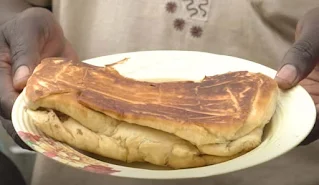
Agege bread is a delicious bread with a very soft center, sweet taste with crunchy crust. Traditional Agege bread is not sold as sliced bread. You can substitute coconut oil for the butter for a different version of Agege bread.

Agege bread was created by Alhaji Ayokunnu

Agege bread was created by Alhaji Ayokunnu


How to make sweet Nigerian Agege bread ingredients and directions

Ingredients

6 cups all-purpose flour
2 packages active dry yeast
½ cup white sugar
2½ cups warm water
3 tablespoons softened butter
1 tablespoon salt

Directions

Preheat oven to 350 degrees F. In a large bowl, dissolve yeast and sugar in warm water. Stir in butter, salt and two cups of the flour. Stir in the remaining flour, 1/2 cup at a time, mixing well after each addition. 

When the dough has pulled together, turn it out onto a lightly floured surface and knead until smooth and elastic, about 8 minutes. Lightly oil a large bowl, place the dough in the bowl and turn to coat with oil. Cover with a damp cloth and let rise in a warm place until doubled in volume about 1 hour. 

Deflate the dough and turn it out onto a lightly floured surface. Place the loaves into two lightly greased 9x5 inch loaf pans. Cover the loaves with a damp cloth and let rise until doubled in volume, about 40 minutes. 

Bake for about 30 minutes or until the top is golden brown and the bottom of the loaf sounds hollow when tapped. Cool on a bread rack and serve with butter, jam or jelly. You can also make the African Gourmet Agege egg breakfast Sandwich below.


Agege bread Breakfast in Agege Nigeria

Agege bread breakfast sandwich in Agege Nigeria


Agege bread egg breakfast sandwich recipe


Ingredients

4 large eggs
1 medium tomato, chopped
1 small zucchini, chopped
1 small onion, chopped
½ cup chopped green pepper
¼ teaspoon salt
½ teaspoon red pepper
1 tablespoon butter

Directions

In large bowl, beat the eggs well. Add remaining ingredients except butter and mix well. In a large warm skillet melt butter then pour egg mixture into skillet. Cook until puffed and lightly browned on the bottom then flip over and cook the other side. Carefully run a knife around edge of skillet to loosen omelet. Place the omelet in between slices of Agege bread and enjoy you Agege bread breakfast sandwich. 

Explore how breads connect Africa’s culinary heritage in the African Recipes Collection Hub and discover dessert pairings in the African Desserts & Sweets Hub .


More bread recipes to make right now so you never have to eat plain white bread again.

  1. Curry Roti Bread Recipe
  2. African Veggie Bread Bowl Recipe
  3. Vetkoek South African Fat Cake Recipe
  4. Boerewors and Sandwiches
  5. South African Freedom Amasi Scones Recipe

Chic African Culture and The African Gourmet=

Cite The Source

Copy & Paste Citation

One click copies the full citation to your clipboard.

APA Style: Click button to generate
African woman farmer

She Feeds Africa

Before sunrise, after sunset, seven days a week — she grows the food that keeps the continent alive.

60–80 % of Africa’s calories come from her hands.
Yet the land, the credit, and the recognition still belong to someone else.

Read her story →

To every mother of millet and miracles —
thank you.

African Gourmet FAQ

Archive Inquiries

Why "The African Gourmet" if you're an archive?

The name reflects our origin in 2006 as a culinary anthropology project. Over 19 years, we've evolved into a comprehensive digital archive preserving Africa's cultural narratives. "Gourmet" now signifies our curated approach to cultural preservation—each entry carefully selected and contextualized.

What distinguishes this archive from other cultural resources?

We maintain 19 years of continuous cultural documentation—a living timeline of African expression. Unlike static repositories, our archive connects historical traditions with contemporary developments, showing cultural evolution in real time.

How is content selected for the archive?

Our curation follows archival principles: significance, context, and enduring value. We preserve both foundational cultural elements and timely analyses, ensuring future generations understand Africa's complex cultural landscape.

What geographic scope does the archive cover?

The archive spans all 54 African nations, with particular attention to preserving underrepresented cultural narratives. Our mission is comprehensive cultural preservation across the entire continent.

Can researchers access the full archive?

Yes. As a digital archive, we're committed to accessibility. Our 19-year collection is fully searchable and organized for both public education and academic research.

How does this archive ensure cultural preservation?

Through consistent documentation since 2006, we've created an irreplaceable cultural record. Each entry is contextualized within broader African cultural frameworks, preserving not just content but meaning.