🌿 Share this page

The African Gourmet

The African Gourmet: Explore African Culture & Recipes

One bowl of fufu can explain a war. One proverb can outsmart a drought.
Welcome to the real Africa—told through food, memory, and truth.

Christmas & New Year in Africa

FOOD PROVERBS

African cooks preparing food outdoors, illustrating climate and tool impacts on cooking times

How Cooking Times Vary Across Africa

Cooking times in Africa are shaped by altitude (lower boiling points), humidity (evaporation rates), fuel (heat control), cookware (efficiency), and seasonal changes. A pot of beans might cook in 1–2 hours at sea level but require 3+ hours (or pressure) in Addis Ababa due to boiling at ~93–95°C.

1. East African Highlands (e.g., Ethiopia ~2,350m, Kenya highlands ~1,600–2,700m)

Ethiopian woman cooking injera on traditional stove in highlands

Key factor: High altitude lowers boiling point ~5–8°C below sea level.

  • Boiling/simmering legumes or stews often 50–200% longer without adaptations.
  • Common fixes: Overnight soaking, pressure cookers (increasingly urban).
  • Injera batter ferments normally, but wats simmer longer.

2. North African Desert & Sahel
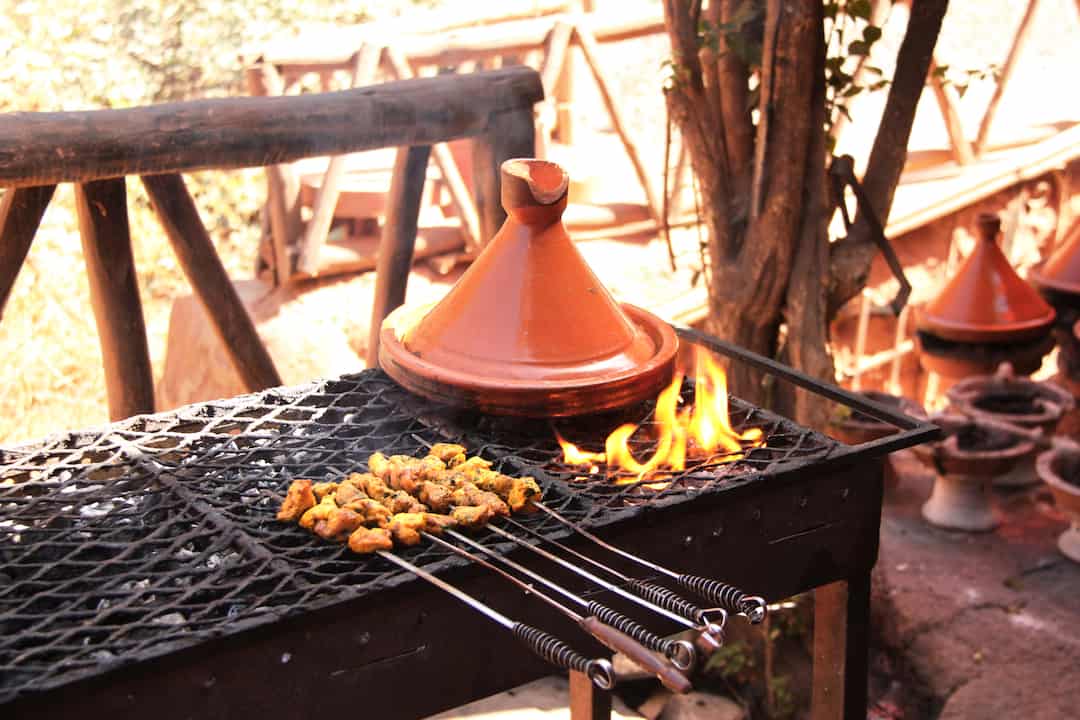
Moroccan tagine cooking on charcoal

Key factor: Dry air aids evaporation, but tagines conserve moisture.

  • Tagines enable efficient slow steaming with minimal water.
  • Couscous steams rapidly over broth.

3. West African Humid Coast & Forest

West African woman frying akara in outdoor market

Key factor: High humidity slightly hinders surface crisping in frying.

  • Deep-frying plantain or akara common despite moisture.
  • Boiling yam/cassava stable; palm-oil stews reduce consistently.

4. Southern African Highveld
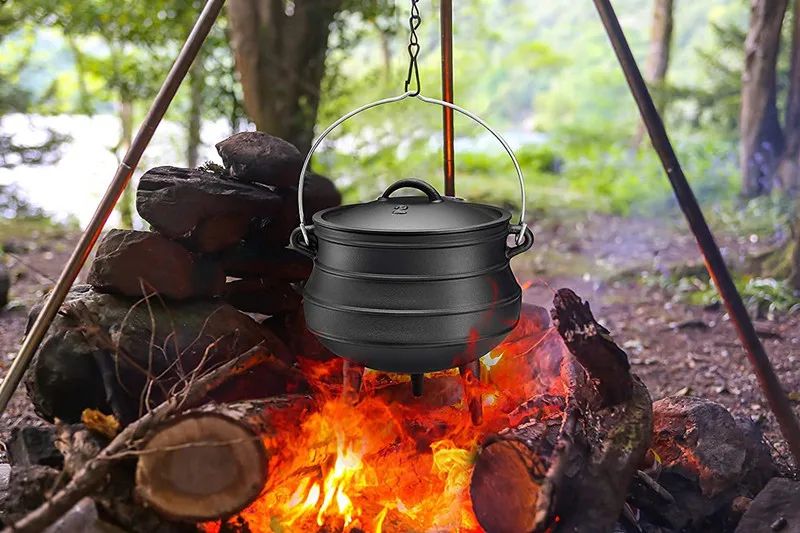
South African potjie pot over fire

Key factor: Altitude + seasonal cold.

  • Cast-iron potjies retain heat for even slow cooking.
  • Winter slows outdoor braai/grilling.

5. Indian Ocean Islands (e.g., Madagascar)

Madagascar romazava with coconut influences

Key factor: Humid tropics.

  • Coconut-milk curries (romazava variants) simmer steadily.

Traditional Open Fires

Three-stone fire in rural Africa

Rural staple: Three-stone fires (firewood dominant) uneven, smoky; charcoal urban for control.

Ingredient Adjustments (Approximate; varies by variety/soaking)

IngredientSea LevelHigh Altitude (~2,000–2,500m)Notes
Beans/Lentils1–2 hours2–4+ hours (or pressure)Soaking essential; studies show up to 3x longer.
Cassava/Yam20–40 min30–60+ minLess affected than legumes.

Seasonal Variations

  • Rainy: Slows drying/smoking.
  • Dry/Harmattan: Speeds evaporation/grilling.

Cite The Source

Copy & Paste Citation

One click copies the full citation to your clipboard.

APA Style: Click button to generate

African Recipes Organized by Meal Time

African Drinks & Beverages

Snacks & Appetizers

Breakfast

Lunch

Dinner

Desserts

Recipes as Revolution

Recipes as Revolution

When food becomes protest and meals carry political meaning

Loading revolutionary recipes...
African woman farmer

She Feeds Africa

Before sunrise, after sunset, seven days a week — she grows the food that keeps the continent alive.

60–80 % of Africa’s calories come from her hands.
Yet the land, the credit, and the recognition still belong to someone else.

Read her story →

To every mother of millet and miracles —
thank you.

African Gourmet FAQ

Archive Inquiries

Why "The African Gourmet" if you're an archive?

The name reflects our origin in 2006 as a culinary anthropology project. Over 18 years, we've evolved into a comprehensive digital archive preserving Africa's cultural narratives. "Gourmet" now signifies our curated approach to cultural preservation—each entry carefully selected and contextualized.

What distinguishes this archive from other cultural resources?

We maintain 18 years of continuous cultural documentation—a living timeline of African expression. Unlike static repositories, our archive connects historical traditions with contemporary developments, showing cultural evolution in real time.

How is content selected for the archive?

Our curation follows archival principles: significance, context, and enduring value. We preserve both foundational cultural elements and timely analyses, ensuring future generations understand Africa's complex cultural landscape.

What geographic scope does the archive cover?

The archive spans all 54 African nations, with particular attention to preserving underrepresented cultural narratives. Our mission is comprehensive cultural preservation across the entire continent.

Can researchers access the full archive?

Yes. As a digital archive, we're committed to accessibility. Our 18-year collection is fully searchable and organized for both public education and academic research.

How does this archive ensure cultural preservation?

Through consistent documentation since 2006, we've created an irreplaceable cultural record. Each entry is contextualized within broader African cultural frameworks, preserving not just content but meaning.