🌿 Share this page

The African Gourmet

The African Gourmet: Explore African Culture & Recipes

One bowl of fufu can explain a war. One proverb can outsmart a drought.
Welcome to the real Africa—told through food, memory, and truth.

Christmas & New Year in Africa

FOOD PROVERBS

Why Turtles Love Water African Folktale

Turtles spend most of their lives in the water and the African folktale, why turtles live in water explains the reason why.

Turtles spend most of their lives in the water paddling along with webbed feet or streamlined flippers. Sea turtles almost never leave the ocean, except to lay eggs in the sand. Freshwater turtles live in ponds and lakes climbing out of the water only to lay out in the sun on logs or rocks, but why? The African folktale, why turtles live in water explains the reason why.
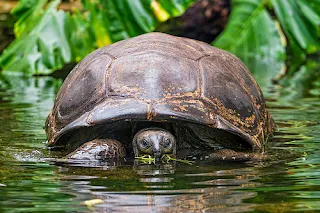
Happy turtle

Why Turtles Live in Water is a captivating African folktale.
 
Turtles used to live on the land, they say, until the time a clever turtle was caught by some hunters. They brought him to their village and placed the turtle before the Chief, who said, "How shall we cook him?"

"You'll have to kill me first," said the turtle, "and take me out of this shell." "We'll break your shell with sticks," they said. "That'll never work," said the turtle, "Why don't you throw me in the water and drown me?!"

"Excellent idea," said the Chief. They took the turtle to the river and threw him into the water to drown him. They were congratulating themselves on their success in drowning the turtle, when two little green eyes poked up in the water and the laughing turtle said, "Don't get those cooking pots out too fast, foolish people!

As he swam away he said, "I think I'll spend most of my time from now on, safely in the water." It has been that way ever since!

Links to more African Folklore

Cite The Source

Copy & Paste Citation

One click copies the full citation to your clipboard.

APA Style: Click button to generate

African Recipes Organized by Meal Time

African Drinks & Beverages

Snacks & Appetizers

Breakfast

Lunch

Dinner

Desserts

Recipes as Revolution

Recipes as Revolution

When food becomes protest and meals carry political meaning

Loading revolutionary recipes...
African woman farmer

She Feeds Africa

Before sunrise, after sunset, seven days a week — she grows the food that keeps the continent alive.

60–80 % of Africa’s calories come from her hands.
Yet the land, the credit, and the recognition still belong to someone else.

Read her story →

To every mother of millet and miracles —
thank you.

African Gourmet FAQ

Archive Inquiries

Why "The African Gourmet" if you're an archive?

The name reflects our origin in 2006 as a culinary anthropology project. Over 18 years, we've evolved into a comprehensive digital archive preserving Africa's cultural narratives. "Gourmet" now signifies our curated approach to cultural preservation—each entry carefully selected and contextualized.

What distinguishes this archive from other cultural resources?

We maintain 18 years of continuous cultural documentation—a living timeline of African expression. Unlike static repositories, our archive connects historical traditions with contemporary developments, showing cultural evolution in real time.

How is content selected for the archive?

Our curation follows archival principles: significance, context, and enduring value. We preserve both foundational cultural elements and timely analyses, ensuring future generations understand Africa's complex cultural landscape.

What geographic scope does the archive cover?

The archive spans all 54 African nations, with particular attention to preserving underrepresented cultural narratives. Our mission is comprehensive cultural preservation across the entire continent.

Can researchers access the full archive?

Yes. As a digital archive, we're committed to accessibility. Our 18-year collection is fully searchable and organized for both public education and academic research.

How does this archive ensure cultural preservation?

Through consistent documentation since 2006, we've created an irreplaceable cultural record. Each entry is contextualized within broader African cultural frameworks, preserving not just content but meaning.