๐ŸŒฟ Share this page

The African Gourmet

The African Gourmet: Explore African Culture & Recipes

One bowl of fufu can explain a war. One proverb can outsmart a drought.
Welcome to the real Africa—told through food, memory, and truth.

Christmas & New Year in Africa

FOOD PROVERBS

Believe Your Eyes, Le Lac Rose Natural Strawberry Lake of Africa

In Africa a strawberry lake flows.


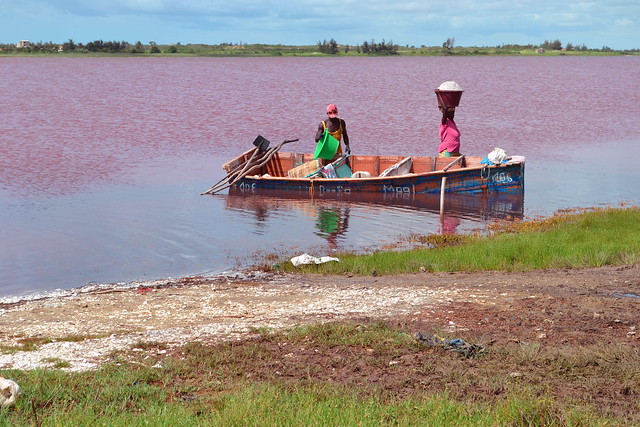
There is a natural lake the color of strawberries, Lake Retba or Le Lac Rose lies in Senegal Africa just one hour from its capital city Dakar.
Le Lac Rose Natural Strawberry Lake of Africa

Believe Your Eyes, Le Lac Rose Natural Strawberry Lake of Africa


Explore and Understand Africa Through Her Food and Culture

Le Lac Rose is sprinkled with salt miners, using their hands and baskets to collect salt. To protect their skin from Senegal Le Lac Rose salty water, miners rub their skin with a very thick lotion, Shea butter.

Le Lac Rose is sprinkled with salt miners, using their hands and shovels to collect salt.

Lake Retba is named for its pink waters caused by an edible, salt-loving micro-algae dunaliella salina. Dunaliella salina is a microalgae occurring naturally in a number of locations worldwide. Dunaliella salina is an ideal organism to study the effects of saline adaptation in algae.

Le Lac Rose is a natural curiosity thanks to the exceptional color of its waters that daily turn from colors from African violet to ruby red.

Covering an area of approximately one sq mile, the lake breaks down into four adjacent sections labeled Khaar Yaala, Khosss, Virage and Darajee.

The color of Le Lac Rose is particularly visible during the dry season from November to June. The one sq mile strawberry lake has been a candidate for UNESCO World Heritage status since 2005. Several countries around the world have pink lakes, including Senegal, Canada, Spain, Australia and Azerbaijan.

It is estimated 1,000 people work around Le Lac Rose collecting 24,000 tons of the salt each year. Over half of the salt is exported throughout Africa.
With a maximum depth of less than ¼ mile, it contains a significant amount of salt that is labored by salt miners and exported throughout the world for cooking, leather goods, and de-icing roads.

Le Lac Rose Natural Strawberry Lake of Africa

Did you know?
The coloring of Le Lac Rosewaters changes throughout the day from African violet to ruby red.

A brief look at Senegal

Named for the Senegal River that forms the northern border of the country; many theories exist for the origin of the river name; perhaps the most widely cited derives the name from Azenegue, the Portuguese appellation for the Berber Zenaga people who lived north of the river. Senegal independence came on April 4, 1960, from France however, complete independence achieved upon dissolution of federation with Mali on August 20, 1960. 

Senegal’s economy is driven by mining, construction, tourism, fisheries, and agriculture, which are the primary sources of employment in rural areas. 

Senegal’s flag has three equal vertical bands of green on the hoist side, yellow, and red with a small green five-pointed star centered in the yellow band; green represents Islam, progress, and hope; yellow signifies natural wealth and progress; red symbolizes sacrifice and determination; the star denotes unity and hope. Le Lac Rose natural strawberry lake of Africa Lake Retba is named for its pink waters caused by an edible, salt-loving micro-algae dunaliella salina.

African Recipes Organized by Meal Time

African Drinks & Beverages

Snacks & Appetizers

Breakfast

Lunch

Dinner

Desserts

Photo of Ivy, author of The African Gourmet

About the Author

A Legacy Resource, Recognized Worldwide

For 19 years, The African Gourmet has preserved Africa's stories is currently selected for expert consideration by the Library of Congress Web Archives, the world's premier guardian of cultural heritage.

Trusted by: WikipediaEmory University African StudiesUniversity of KansasUniversity of KwaZulu-NatalMDPI Scholarly Journals.
Explore our archived collections → DOI: 10.5281/zenodo.17329200

View citations →

Recipes as Revolution

Recipes as Revolution

When food becomes protest and meals carry political meaning

Loading revolutionary recipes...
African woman farmer

She Feeds Africa

Before sunrise, after sunset, seven days a week — she grows the food that keeps the continent alive.

60–80 % of Africa’s calories come from her hands.
Yet the land, the credit, and the recognition still belong to someone else.

Read her story →

To every mother of millet and miracles —
thank you.

More African Reads

African Ancestors and Atlantic Hurricanes: Myth Meets Meteorology

Survival of the Fattest, obese Europeans starving Africa

Top 20 Largest Countries in Africa by Land Area (2025 Update)

African Proverbs for Men About the Wrong Woman in Their Life

Ugali vs Fufu — What’s the Difference Between Africa’s Beloved Staples?

Charging Cell Phones in Rural Africa

Beware of the naked man who offers you clothes African Proverb

African Olympic Power: Top 10 Countries with the Most Gold Medals | The African Gourmet

Perfect South African Apricot Beef Curry Recipe

Usage of Amen and Ashe or Ase and Meaning

Week’s Best African Culture Posts

Before You Buy Land in Africa: 8 Critical Pitfalls Every Diaspora Member Must Avoid

Imhotep: Folklore, Wisdom & The Egyptian Search for Order

Aloe Vera: Nature's Pharmacy | African Science & Folklore

Kei Apple Recipes: Traditional African Fruit Cooking & Folk Science

Ugali vs Fufu — What’s the Difference Between Africa’s Beloved Staples?

Korean vs African Cuisine: Fermentation, Fire & Flavor Bridges - The African Gourmet

African Gourmet FAQ

Archive Inquiries

Why "The African Gourmet" if you're an archive?

The name reflects our origin in 2006 as a culinary anthropology project. Over 18 years, we've evolved into a comprehensive digital archive preserving Africa's cultural narratives. "Gourmet" now signifies our curated approach to cultural preservation—each entry carefully selected and contextualized.

What distinguishes this archive from other cultural resources?

We maintain 18 years of continuous cultural documentation—a living timeline of African expression. Unlike static repositories, our archive connects historical traditions with contemporary developments, showing cultural evolution in real time.

How is content selected for the archive?

Our curation follows archival principles: significance, context, and enduring value. We preserve both foundational cultural elements and timely analyses, ensuring future generations understand Africa's complex cultural landscape.

What geographic scope does the archive cover?

The archive spans all 54 African nations, with particular attention to preserving underrepresented cultural narratives. Our mission is comprehensive cultural preservation across the entire continent.

Can researchers access the full archive?

Yes. As a digital archive, we're committed to accessibility. Our 18-year collection is fully searchable and organized for both public education and academic research.

How does this archive ensure cultural preservation?

Through consistent documentation since 2006, we've created an irreplaceable cultural record. Each entry is contextualized within broader African cultural frameworks, preserving not just content but meaning.