Five Air Purifying Cape Floral Kingdom Herbs
Part of our African Geography Hub — Explore Africa's landscapes and environment.
In the Cape Floral Kingdom of South Africa, five herbs naturally scent the air in your house. They are basil, jasmine, lavender, mint, and rosemary.
 |
| Dried herbs |
Cape Floral Kingdom.
In the southwestern corner of South Africa, there is a distinct kingdom; the Cape Floral Kingdom which contains about 3% of the world's plants. In fact, it boasts over 9,000 plant species, of which nearly 70% are endemic, meaning they are exclusive to this region. The Cape Floral Region is one of the richest areas for plants when compared to any similar-sized area in the world. It is recognized as one of the world's six floral kingdoms and holds immense ecological importance and natural beauty.
It represents less than 0.5% of the area of Africa but is home to nearly 20% of the continent’s flora. The kingdom's plant diversity is a testament to millions of years of evolution and adaptation to the region's specific climatic and environmental conditions. In the Cape Floral Kingdom of South Africa, five herbs naturally scent the air in your house. They are basil, jasmine, lavender, mint, and rosemary plants.
Five Air Purifying Cape Floral Kingdom Herbs.
Sweet Basil.
Many varieties of basil often have a sweet smell. To keep basil cut plants fresh for a few days by putting the cut ends in water just like a cut flower. They will add a fresh fragrance to the air but do not keep fresh leaves in the refrigerator, though, as they will turn brown.
Basil is considered potent to inspire love while protecting from every misfortune those who cultivate it, sanctify and guide them to heaven. It is difficult to understand why so sacred and so fragrant herb as Sweet Basil should have become known as a symbol of hatred in the modern era. It is unfortunate to dream of Basil, for it is supposed to betoken grief and misfortune.
Jasmine.
Many jasmine flower varieties have a distinct scent that is strong long after it is picked and are usually white or yellow in color. Jasmine is cultivated commercially for domestic and industrial uses, such as the perfume industry. Jasmine flowers are also known as Moonlight of the Grove. To dream of this beautiful flower foretells good luck; to lovers it is a sure sign they will be speedily married. Jasmine flowers are known as a symbol of friendliness.
Lavender.
Dried lavender flowers and lavender essential oils are popular for color and fragrance. There are 47 known species of the lavender flower; many are also used as a culinary herbs. Lavender flowers are known as a symbol of silence and mistrust.
Lavender was used generally in baths where the name derived from, the Latin verb, lavare, to wash. It was once believed that the asp, a dangerous species of snake, made Lavender its customary resting place, for which reason the lavender plant was approached with extreme caution.
Mint.
Mints are one of the most aromatic plants with leaf colors ranging from dark green and gray-green to purple, blue, and sometimes pale yellow with the flowers being white to purple in color. There are many different mints; different species, hybrids, and special selections that are grown all over the world.
Most of them are water lovers and are usually found growing in wet and damp places. Fresh mint leaves should be used immediately or stored for up to three days in sealed plastic bags in a cool place. Dried mint leaves should be stored in an airtight container placed in a cool, dark, dry area.
Mint leaves are known as a symbol of wisdom and virtue. The herb was dedicated to the Virgin, under the name of Herba Sanctæ Mariæ. It was formerly customary to scatter the churches with mint flowers.
Rosemary.
Rosemary is deemed an herb of the sun. Rosemary is a member of the mint family with needle-like leaves and white, pink, purple, or blue flowers. Rosemary can grow quite large and retain attractiveness for many years.
Sprigs of rosemary were once worn at weddings as well as at funerals. By many persons Rosemary is used as tea for headaches and nervous disorders, it was once believed rosemary, worn about the body, strengthens memory. Rosemary plants are known as a symbol of reviving energy. Rosemary has traditionally been used as a medicine for many sicknesses like coughs and colds, and colic.
How to dry herbs naturally.
One of the oldest methods of preserving herbs is air drying. Air-drying is the process of removing water from herbs to prevent the growth of bacteria and decay.
The air-drying method does not deplete the herbs of their oils making them perfect for use in cooking and crafts.
Gather clean herbs together by their stems, tie stems with string, place them in a paper sack with holes punched in it for air circulation, and hang them upside down in a warm, airy room. Keep checking weekly until your herbs are completely dry.
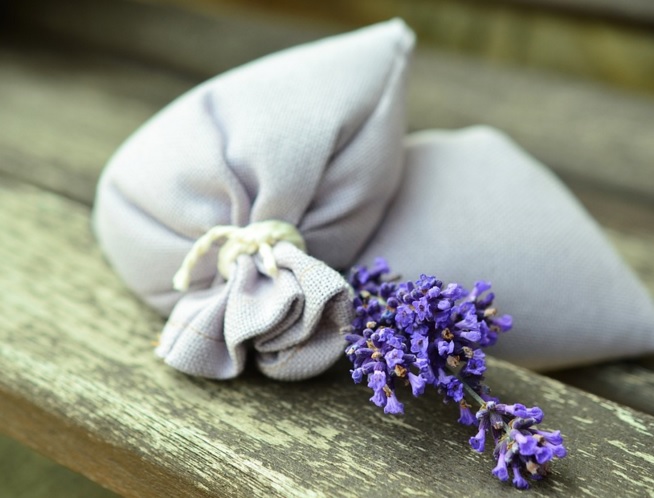 |
| Lavender sachet |
Our favorite air-purifying herb is lavender. Let's learn how to make a no-sew lavender sachet.
Materials and Directions.
Place a handful of dried lavender inside a fabric square or netting circle and tie it with a decorative ribbon. Keep a relaxing lavender bag by your pillow for a good night's sleep and in your dresser drawers for a light fresh scent.