
🌿 Share this page

One bowl of fufu can explain a war. One proverb can outsmart a drought.

Welcome to the real Africa— told through food, memory, and truth.

Start Exploring Here

🔵 African Recipes & Cuisine

Dive into flavors from Jollof to fufu—recipes, science, and stories that feed body and soul.

Explore Recipes →

🔵 African Proverbs & Wisdom

Timeless sayings on love, resilience, and leadership—ancient guides for modern life.

Discover Wisdom →

🔵 African Folktales & Storytelling

Oral legends and tales that whisper ancestral secrets and spark imagination.

Read Stories →

🔵African Plants & Healing

From baobab to kola nuts—sacred flora for medicine, memory, and sustenance.

Discover Plants →

🔵 African Animals in Culture

Big Five to folklore beasts—wildlife as symbols, food, and spiritual kin.

Meet Wildlife →

🔵 African History & Heritage

Journey through Africa's rich historical tapestry, from ancient civilizations to modern nations.

Explore History →
Photo of Ivy, author of The African Gourmet

About the Author

A Legacy Resource, Recognized Worldwide

For 19 years, The African Gourmet has preserved Africa's stories is currently selected for expert consideration by the Library of Congress Web Archives, the world's premier guardian of cultural heritage.

Trusted by: WikipediaEmory University African StudiesUniversity of KansasUniversity of KwaZulu-NatalMDPI Scholarly Journals.
Explore our archived collections → DOI: 10.5281/zenodo.17329200

View citations →

Recipes as Revolution

When food becomes protest and meals carry political meaning

What to Make with Cassava Flour and Curry Paste Recipe

What to Make with Cassava Flour and Curry Paste Recipe
You will find a variety of countries represented in the international aisle of your supermarket, for example, those bags of ground cassava flour and curry paste are international recipe powerhouses perfect for making Gari.

Just a cup of cassava flour and a tablespoon of curry paste, staples in the international aisle of any a supermarket can add a potent, exotic flavor to many dishes. Gari is a roasted grain of the cassava tuber and is a major product in rural and urban areas of Africa.


Gari fritters made with cassava flour and curry
Gari fritters made with cassava flour and curry 

Cassava belongs to the Euphorbiaceae family, which is known for plants with milky sap and includes plants like poinsettias and cotton. Many species contain milky latex, and some are useful as a source of oil or wax. Cassava is mostly grown on three continents extensively, Africa below the Sahara desert, tropical South America and Southeast Asia.

About half of the world production of cassava is in Africa. Cassava is drought tolerant and cultivated in around 40 African countries, stretching through a wide belt from Madagascar in the Southeast to Senegal and to Cape Verde in the Northwest.

Around 70% of Africa's cassava is harvested in Nigeria, the Republic of the Congo, and Tanzania. Throughout the forest and transition zones of Africa, cassava is either a primary staple or a secondary food staple.

Farmers in Africa grow several cassava varieties. There are countless local cassava varieties in six counties, namely the Republic of the Congo, Côte d'Ivoire, Ghana, Nigeria, Tanzania and Uganda grouped into the bitter and the sweet varieties.

In the roots, cassava is categorized as either sweet or bitter, indicating the toxic levels of cyanogenic glycosides. Sweet cultivars can produce very tiny amounts, while bitter ones may produce more than 50 times more. Cyanogenic glycosides are natural plant toxins that are present in several plants, most of which are consumed by humans.

Bitter cassavas are toxic until extensively processed to remove the poisonous hydrocyanic acid. The sweet varieties are grown more extensively in Côte d'Ivoire, Ghana, and Uganda while the bitter varieties are more common in the Congo, Nigeria, and Tanzania.

The roots are not eaten fresh but peeled then steamed, fried or roasted when fresh or fermented in order to diminish the contents of poisonous cyanogenic glycosides, the peel has a higher concentration than the interior. All plant parts of the cassava plant contains cyanogenic glycosides with the leaves having the highest concentrations.

Maize is Africa's most important food crop; cassava is Africa's second most important food staple in terms of per capita calories consumed. Cassava is a major source of calories for millions of African people.

In some countries, cassava is consumed daily and sometimes more than once a day. In the Congo, cassava contributes more than 1,000 calories per person per day to the average diet and many families eat cassava for breakfast, lunch, and dinner.


Did you know?
A typical curry paste contains many complex ingredients, including garlic and shallot, galangal, lemongrass, and kaffir lime peel. Just a spoonful or two of curry paste infuses countless recipes with an international flavor.

Golden brown Curry Gari Fritters are a favorite recipe of Western Africa made with ground cassava flour, hot curry paste and spices fried into delicious snacks.

Gari fritters made with cassava flour and curry seasonings

Cassava and Curry Gari Fritters


Ingredients
2 cups cassava flour
1 teaspoon hot curry paste
1/2 teaspoon onion powder
1/2 teaspoon garlic salt
1 tablespoon white sugar
1/4 - 1/3 cups water
1-2 cups oil for frying


Directions
In a large frying pan heat vegetable oil. Add all ingredients, mix well and form small fritters, fry until golden brown about 3 minutes on each side. Sprinkle with extra salt or curry powder before serving.

Chic African Culture and The African Gourmet=
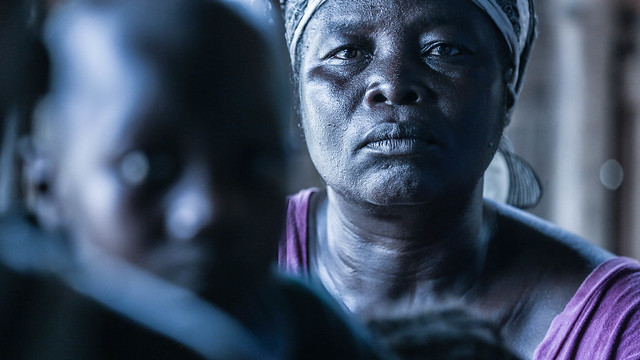
African woman farmer

She Feeds Africa

Before sunrise, after sunset, seven days a week — she grows the food that keeps the continent alive.

60–80 % of Africa’s calories come from her hands.
Yet the land, the credit, and the recognition still belong to someone else.

Read her story →

To every mother of millet and miracles —
thank you.

Africa Worldwide: Top Reads

Read More

African Ancestors and Atlantic Hurricanes: Myth Meets Meteorology

Survival of the Fattest, obese Europeans starving Africa

Top 20 Largest Countries in Africa by Land Area (2025 Update)

African Proverbs for Men About the Wrong Woman in Their Life

Charging Cell Phones in Rural Africa

Ugali vs Fufu — What’s the Difference Between Africa’s Beloved Staples?

Beware of the naked man who offers you clothes African Proverb

African Olympic Power: Top 10 Countries with the Most Gold Medals | The African Gourmet

Perfect South African Apricot Beef Curry Recipe

Usage of Amen and Ashe or Ase and Meaning

Week’s Best African Culture Posts

Kei Apple Recipes: Traditional African Fruit Cooking & Folk Science

African Wrestling Traditions: Dambe, Evala & Senegalese Laamb Explained

Korean vs African Cuisine: Fermentation, Fire & Flavor Bridges - The African Gourmet

Before You Buy Land in Africa: 8 Critical Pitfalls Every Diaspora Member Must Avoid

Kei Apple (Dovyalis caffra): Origins, Uses, Nutrition & Recipes

Ugali vs Fufu — What’s the Difference Between Africa’s Beloved Staples?

African Gourmet FAQ

Archive Inquiries

Why "The African Gourmet" if you're an archive?

The name reflects our origin in 2006 as a culinary anthropology project. Over 18 years, we've evolved into a comprehensive digital archive preserving Africa's cultural narratives. "Gourmet" now signifies our curated approach to cultural preservation—each entry carefully selected and contextualized.

What distinguishes this archive from other cultural resources?

We maintain 18 years of continuous cultural documentation—a living timeline of African expression. Unlike static repositories, our archive connects historical traditions with contemporary developments, showing cultural evolution in real time.

How is content selected for the archive?

Our curation follows archival principles: significance, context, and enduring value. We preserve both foundational cultural elements and timely analyses, ensuring future generations understand Africa's complex cultural landscape.

What geographic scope does the archive cover?

The archive spans all 54 African nations, with particular attention to preserving underrepresented cultural narratives. Our mission is comprehensive cultural preservation across the entire continent.

Can researchers access the full archive?

Yes. As a digital archive, we're committed to accessibility. Our 18-year collection is fully searchable and organized for both public education and academic research.

How does this archive ensure cultural preservation?

Through consistent documentation since 2006, we've created an irreplaceable cultural record. Each entry is contextualized within broader African cultural frameworks, preserving not just content but meaning.