🌿 Share this page

The African Gourmet

The African Gourmet: Explore African Culture & Recipes

One bowl of fufu can explain a war. One proverb can outsmart a drought.
Welcome to the real Africa—told through food, memory, and truth.

Food History, Math and Science

Jollof Rice Has a Dialect: One Pot, Fifty Accents | The African Gourmet

Jollof Rice Has a Dialect
One pot, fifty accents — and every country swears theirs is the original

She came in the bank. She didn’t come to rob it.
She came to collect her birthright: the correct way to make jollof.

Nine pots of jollof rice representing Senegal, Ghana, Nigeria, Sierra Leone, Gambia, Liberia, Cameroon, Haiti, and the broader diaspora.
Nine countries, nine pots, one argument that will never end — and that’s exactly how family works.

The Family Tree (and the family fight)

Senegal – Thieboudienne (the grandmother)

Fish stuffed with rougaille, broken rice, tomato stew cooked separately then married in the pot.
Dialect: “We invented it in the 1300s with the Wolof empire. Everyone else is speaking pidgin.”

Ghana – The Loud Cousin

Basmati rice, jasmine scent, extra tomatoes, no fish, heavy on the spice.
Dialect: “Ours is redder, spicier, and we eat it with shito. End of discussion.”

Nigeria – The Confident Uncle

Parboiled long-grain, palm-oil glow, scotch bonnets, party-size pot.
Dialect: “We made it famous. Google ‘Jollof Wars’ — case closed.”

Sierra Leone – The Smoky Aunt

Heavy on smoked bonga fish, cooked over open fire.
Dialect: “We gave it soul. Everyone else just added Wi-Fi.”

The Gambia – The Quiet Twin

Almost identical to Senegal but insists “we were doing it before the border existed.”

Liberia – The Coconut Cousin

Coconut milk, less tomato, softer texture.
Dialect: “We crossed the Atlantic and brought the recipe back richer.”

Cameroon – The Pepper Prince

Extra heat, sometimes plantains, always attitude.

Haiti – Diri ak Djondjon (the Caribbean cousin)

Black mushroom rice with cloves and coconut — same DNA, island accent.

African-America – The Diaspora Child

Carolina Gold rice, smoked turkey, creole seasoning — jollof that took the Middle Passage and came back singing.

The One Thing Every Jollof Pot Agrees On

The Tomato.

Fresh, canned, paste, sun-dried, roasted — doesn’t matter.
The pot is not jollof until the tomatoes hit the hot oil and the kitchen fills with that sweet, sharp perfume that says “West Africa just walked in the room.”

The Portuguese brought the tomato from the Americas to West Africa in the 1500s.
By the 1700s it had replaced sorrel and tamarind as the red soul of the stew.
And every country took that one ingredient and taught it their own accent.

So yes — we argue about everything else.
But the tomato?
The tomato is the silent agreement that keeps the family together.

Same grandmother. Same pot. Different fire.
That’s how family works.

© 2025 The African Gourmet – Published under Creative Commons Attribution-NonCommercial-ShareAlike 4.0 International (CC BY-NC-SA 4.0)

Cite The Source

Copy & Paste Citation

One click copies the full citation to your clipboard.

APA Style: Click button to generate
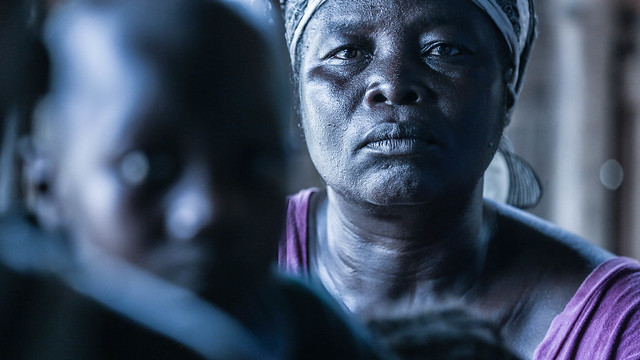
African woman farmer

She Feeds Africa

Before sunrise, after sunset, seven days a week — she grows the food that keeps the continent alive.

60–80 % of Africa’s calories come from her hands.
Yet the land, the credit, and the recognition still belong to someone else.

Read her story →

To every mother of millet and miracles —
thank you.

African Gourmet FAQ

Archive Inquiries

Why "The African Gourmet" if you're an archive?

The name reflects our origin in 2006 as a culinary anthropology project. Over 19 years, we've evolved into a comprehensive digital archive preserving Africa's cultural narratives. "Gourmet" now signifies our curated approach to cultural preservation—each entry carefully selected and contextualized.

What distinguishes this archive from other cultural resources?

We maintain 19 years of continuous cultural documentation—a living timeline of African expression. Unlike static repositories, our archive connects historical traditions with contemporary developments, showing cultural evolution in real time.

How is content selected for the archive?

Our curation follows archival principles: significance, context, and enduring value. We preserve both foundational cultural elements and timely analyses, ensuring future generations understand Africa's complex cultural landscape.

What geographic scope does the archive cover?

The archive spans all 54 African nations, with particular attention to preserving underrepresented cultural narratives. Our mission is comprehensive cultural preservation across the entire continent.

Can researchers access the full archive?

Yes. As a digital archive, we're committed to accessibility. Our 19-year collection is fully searchable and organized for both public education and academic research.

How does this archive ensure cultural preservation?

Through consistent documentation since 2006, we've created an irreplaceable cultural record. Each entry is contextualized within broader African cultural frameworks, preserving not just content but meaning.